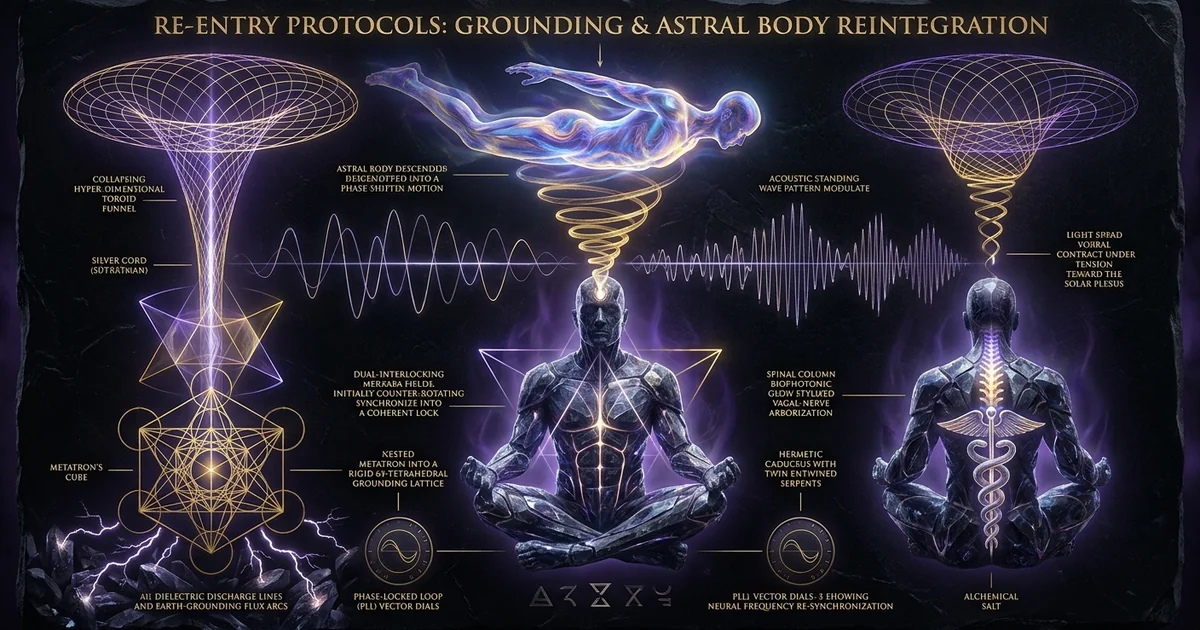
Re-Entry Protocols: Grounding & Astral Body Reintegration
Protocol Overview & Neurophysiological Thesis
The voluntary or entrained exteriorization of human self-location—commonly categorized within clinical literature as an out-of-body experience (OBE) and within transpersonal disciplines as an astral projection—represents a reversible functional disruption of multisensory body integration. At the core of this state is the neurobiological de-coupling of the primary sensory cortices, the vestibular network, and the right temporoparietal junction (rTPJ). When conscious awareness returns to the physical frame, this de-coupling must be systematically reversed. The physiological imperative of astral re entry protocols somatic grounding physical integration centers on the coordinated re-establishment of afferent somatosensory cascades, bilateral hemispheric phase-locking, and homeostatic autonomic tone.
+-------------------------------------------------------------------------+
|                  SOMATIC REINTEGRATION PHASE SPACE                      |
+-------------------------------------------------------------------------+
| [EXTERIORIZED FIELD] Low Theta/Delta (1.5 - 4.5 Hz) | rTPJ Suppressed   |
|         │                                                               |
|         ▼ (Ascending Binaural Vector / Thalamocortical Ramping)         |
| [INTERMEDIATE LIMINALITY] Alpha Wave Gating (8.0 - 10.5 Hz)             |
|         │                                                               |
|         ▼ (Distal-to-Axial Somatosensory Recruitment)                   |
| [SENSORIMOTOR LOCK] Central Sulcus SMR (12.0 - 15.0 Hz) | rTPJ Coherent|
|         │                                                               |
|         ▼ (Conductive Earthing & Autonomic Stabilization)               |
| [GROUNDED HOMEOSTASIS] Beta-Gamma Sensorimotor Loop (15.0 - 40.0 Hz)    |
+-------------------------------------------------------------------------+
De-coupling of the Temporoparietal Junction and Proprioceptive Anchoring
The temporoparietal junction, specifically localized within the right angular and supramarginal gyri, operates as the primary neuroanatomical nexus responsible for processing vestibular inputs, visual body position indicators, and somatosensory proprioceptive signals. In baseline waking consciousness, the rTPJ continuously synthesizes this tripartite afferent stream to construct an egocentric spatial frame of reference. This computational loop anchors the psychological experiencing self directly within the physical boundaries of the organism. During prolonged out-of-body episodes, whether induced via sensory deprivation, deep meditative deceleration, or targeted /sound-cymatics/binaural-beats-acoustic-physics, this area exhibits profound functional hypo-connectivity.
Electrophysiological studies reveal that as non-local or dissociative awareness manifests, the temporoparietal architecture ceases to integrate ascending proprioceptive data. The primary somatosensory cortex (S1) undergoes localized sensory attenuation, while cortical networks register an electroencephalographic shift from wakeful alpha rhythms (8–12 Hz) to low-amplitude, diffuse theta (4–7 Hz) and high-voltage slow delta (0.5–4 Hz). Under these conditions, the central nervous system experiences a breakdown in the efference copy mechanism: the motor and premotor cortices no longer project anticipatory postural adjustments to the vestibular nuclei. The subjective observer perceives a translocation of spatial awareness outside the biological envelope.
Blanke, O., Ortigue, S., Landis, T., & Seeck, M. (2002). Stimulating illusory own-body perceptions. Nature, 419(6904), 269-270.
Tart, C. T. (1968). A psychophysiological study of out-of-the-body experiences in a selected subject. Journal of the American Society for Psychical Research, 62(1), 3-27.
Electrophysiological investigations by Tart demonstrate that intentional somatic exteriorization correlates with sustained bilateral occipital alpha suppression down to <10 µV, replaced by persistent 1.5–4.0 Hz polymorphic delta waves without classical sleep spindles or REM sleep markers. Complementary clinical mapping by Blanke et al. confirms that focal electrical stimulation of the right angular gyrus at 2.5–4.0 mA reliably produces out-of-body perceptions and visual limb displacement by disrupting the integration of somatosensory and vestibular inputs. Abrupt cessation of these experimental states without graded down-titration precipitates transient vestibular nystagmus, ocular dysmetria, and an autonomic spike characterized by an instantaneous 30–45 bpm heart rate elevation.
Proprioceptive anchoring relies entirely on the mechanical deformation of muscle spindles, Golgi tendon organs, and cutaneous mechanoreceptors, which feed spatial information through the dorsal column-medial lemniscal pathway directly to the thalamus and somatosensory cortex. When the subtle informational field—the energetic biofield—is displaced or operating independently of this biological substrate, the central nervous system must sustain a delicate metabolic standby state. If the biofield returns into physical alignment without a systematic recalibration of these afferent gateways, the computational processing at the rTPJ fractures, creating severe perceptual parallax between the perceived perceptual locus and the somatic coordinates.
Mechanisms of Sudden Dissociative Deceleration and Re-entry Shock
The phenomenon designated clinically as “sudden snap-back” occurs when an exteriorized subject is abruptly forced back into the physical body via external sensory startle, emotional panic, or an unmoderated termination of an entrainment frequency. Sudden snap back symptoms represent an acute neurovegetative crisis. The physical organism, which has been resting in a state of deep parasympathetic dominance with suppressed metabolic activity, low heart rate variability (HRV), and reduced core temperature, experiences an unmediated sympathetic surge driven by instantaneous locus coeruleus activation.
This sudden dissociative deceleration causes massive vestibular discordance. The brainstem vestibular nuclei, having adapted to the absence of gravitational acceleration vectors and linear head movement feedback, are instantly bombarded by gravitational somatosensory inputs. The resulting sensory mismatch generates acute vestibular ataxia, profound vertigo, ocular nystagmus, cold diaphoresis, and nausea. Simultaneously, the autonomic nervous system undergoes severe dysregulation: the sudden drop in vagal tone, paired with an uncontrolled noradrenergic discharge, provokes paroxysmal sinus tachycardia, peripheral vasoconstriction, and acute hyperventilation.
At the level of consciousness mechanics, the subtle vehicle or biofield slams back into the biological container out of phase. The energetic vectors fail to seat accurately within the fascial, neural, and meridian pathways, leaving the practitioner with persistent sensations of physical displacement, as though their sensory apparatus is hovering several inches offset from their physical eyes and skin. This kinesthetic misattribution can endure for hours or days if an ascending acoustic-somatic protocol is not applied to correct the phase shift.
Target Consciousness Bandwidths: Re-establishing Bilateral Sensorimotor Rhythms
To safely bridge the gap between dissociative states and physical readiness, the central nervous system must be guided out of theta-delta dominance into a precisely localized brainwave bandwidth known as the Sensorimotor Rhythm (SMR). SMR is an electroencephalographic oscillation localized between 12 and 15 Hz, recorded primarily over the central sulcus (electrodes C3, Cz, and C4) spanning the primary motor (M1) and primary somatosensory (S1) cortices.
Delta/Theta (OBE Field)       Alpha (Bridge)               SMR / Low Beta (Integrated)
    0.5 - 7.0 Hz       ───►    8.0 - 11.5 Hz       ───►          12.0 - 15.0 Hz
rTPJ De-coupled               Thalamic Opening             Bilateral S1-M1 Synchronization
Deep Hypnagogia               Vagal Re-regulation          Kinesthetic Reseating Complete
SMR reflects an idling state of the motor system wherein physical movement is restrained, yet cortical readiness, afferent sensory gating, and internal somatic vigilance are exceptionally high. In the architecture of astral re entry protocols somatic grounding physical integration, the re-establishment of robust, bilateral SMR acts as an impermeable neurochemical and electrical bridge. It prevents the brain from tumbling backward into hypnagogic sleep paralysis or surging forward into an over-aroused, hyper-adrenergic panic state.
By generating SMR coherence across both hemispheres, the thalamus opens the gating pathways for somatosensory afference while dampening cortical hyper-reactivity. The practitioner achieves an optimal somatic anchor: the motor units of the skeletal muscular system regain tonus without trembling or myoclonic jerking, the vestibular apparatus normalizes its spatial horizon against the horizontal baseline of the room, and the energetic biofield is drawn downward and inward, firmly aligning with the biological tissue.
Biophysical Mechanisms & Brainwave Dynamics
Safe reintegration after extended excursions into altered operational frameworks—such as those detailed in the /consciousness/monroe-gateway-experience-analysis—requires precise manipulation of the brain’s natural electrodynamic properties. This process centers on driving the auditory brainstem to realign cortical oscillators through the auditory Frequency Following Response (FFR).
Frequency Following Response (FFR) in Reverse Phase-Locking
The human brain possesses an intrinsic capacity to synchronize its dominant electrical activity to external rhythmic sensory stimuli, an electrophysiological process mediated by the superior olivary complex within the brainstem. In the descent phase of an out-of-body trajectory, acoustic technologies leverage binaural beats to systematically depress brainwaves from the waking beta band (15–30 Hz) through relaxing alpha (8–12 Hz) down to hypnagogic theta (4–7 Hz) and delta (0.5–4 Hz).
During re-entry, this vector must be precisely inverted. Reverse phase-locking mandates that the exogenous acoustic driver does not cease abruptly—which leaves the thalamus marooned in high-amplitude slow-wave dissociation—but instead introduces an ascending acoustic ramp. By steadily increasing the binaural difference frequency from 4.5 Hz back up to 14.0 Hz, the auditory brainstem drives a sequential recruitment of thalamocortical loops.
This ascending sweep systematically reactivates the reticular activating system (RAS), which gradually increases cortical baseline arousal. The phase-locked firing of auditory pathway neurons acts as a metronome, guiding the desynchronized, widely dispersed low-frequency waves of the out-of-body state back into tight, coherent, localized oscillatory networks. This stabilizes the neural substrate, ensuring that sensory reintegration progresses without triggering abrupt seizures or cognitive fragmentation.
Carrier Waves, Monaural Beats, and Hemispheric Resynchronization
The selection of the underlying acoustic carrier wave dictates the efficacy of the reintegration protocol. While the difference frequency governs the targeted brainwave frequency, the carrier frequency governs the specific neural populations activated within the auditory cortex. Lower carrier frequencies (e.g., 100 Hz to 250 Hz) preferentially access the lower brainstem structures responsible for autonomic regulation and somatic grounding, whereas higher carriers (e.g., above 500 Hz) engage more superficial cortical networks.
In this protocol, a carrier frequency centered at 196 Hz (corresponding to the musical note G3, structurally linked to somatic resonance within the thoracic and pelvic diaphragms) provides the optimal acoustic foundation. When delivered dichotically—for instance, 196 Hz in the left ear and 200.5 Hz in the right ear—a 4.5 Hz binaural beat is generated within the superior olivary complex. During the ascending re-entry ramp, the right ear frequency is systematically modulated from 200.5 Hz to 210 Hz over a continuous sweep, establishing a final 14 Hz difference frequency.
Acoustic Sweep Progression (Carrier = 196 Hz)
0:00 ──► Right Ear: 200.5 Hz  ──►  Δ = 4.5 Hz  (Deep Theta)
1:30 ──► Right Ear: 204.0 Hz  ──►  Δ = 8.0 Hz  (Alpha Threshold)
2:30 ──► Right Ear: 208.0 Hz  ──►  Δ = 12.0 Hz (SMR Gateway)
3:00 ──► Right Ear: 210.0 Hz  ──►  Δ = 14.0 Hz (Full SMR Phase-Lock)
The introduction of monaural beats alongside binaural vectors can enhance this transition. Unlike binaural beats, which are created purely through central nervous system processing within the brainstem, monaural beats result from the physical interference of two acoustic waves before they reach the eardrum, causing mechanical entrainment at the level of the basilar membrane. Utilizing monaural beats during the terminal minutes of re-entry forces rapid, non-ambiguous hemispheric resynchronization, ensuring both the left and right temporal lobes match phase velocities simultaneously. This eliminates post-projection perceptual drift and restores cognitive clarity.
Neurotransmitter Shifts: Cholinergic Stabilization and Adrenergic Regulation
The out-of-body state is characterized by a unique neurochemical milieu. High-level dissociative states demand low central adrenergic activity and selective cholinergic shifts: acetylcholine within the forebrain is required to sustain lucidity and high-resolution internal imagery, while cholinergic transmission at the somatic neuromuscular junction is suppressed to maintain motor immobility (mimicking the physiological state of REM atonia or deep sleep paralysis).
Upon re-entry, this neurochemical balance must be deliberately reconfigured:
- Cholinergic Reactivation: Acetylcholine must be rapidly liberated across peripheral neuromuscular junctions to restore motor unit responsiveness. Without this peripheral cholinergic surge, the brain recovers conscious waking lucidity while the efferent motor pathways remain blocked, resulting in sleep paralysis accompanied by terrifying kinesthetic hallucinations.
- Adrenergic Regulation: Norepinephrine release from the locus coeruleus must be carefully graduated. A precipitous flooding of the synaptic cleft with norepinephrine produces the typical panic responses of the sudden snap-back syndrome: acute tremor, palpitations, and immediate disorientation. A regulated, gradual upward climb in adrenergic tone restores physical alertness, constricts dilated splanchnic blood vessels to support baseline arterial blood pressure, and sharpens visual accommodation.
- GABAergic Deceleration: High levels of inhibitory gamma-aminobutyric acid (GABA) that insulated the cortex from external stimuli during non-local projection must be metabolized, allowing sensory information to cross the thalamic reticular nucleus.
The biochemical objective of the re-entry architecture is therefore to support gradual cholinergic restoration while stabilizing adrenergic tone, preventing the extremes of hypnagogic sleep paralysis on one side and acute sympathetic shock on the other.
Step-by-Step Experiential Protocol
To achieve total energetic realignment after OBE conditions, practitioners must move through a structured, non-negotiable physical sequence. The three phases of this protocol transition the practitioner from non-local dissociation to somatic embodiment over ten continuous minutes.
0:00                     3:00                     6:00                    10:00
┌────────────────────────┬────────────────────────┬────────────────────────┐
│        PHASE I         │        PHASE II        │       PHASE III        │
│ Acoustic Ramping &     │ Distal Somatomotor     │ Axial Realignment &    │
│ Autonomic Breath Pacing│ Recruitment            │ Tactile SMR Grounding  │
└────────────────────────┴────────────────────────┴────────────────────────┘
Phase I: Acoustic Frequency Ramping and Breath Pacing (0-3 Minutes)
The initial phase begins the moment the intent to return is formulated, or precisely when the session’s ascending audio track initiates its programmed re-entry ramp. The practitioner does not attempt physical movement during this phase; attempting premature gross motor engagement while the cortex is locked in delta-theta dominance induces proprioceptive vertigo and myoclonic shock.
The auditory environment immediately initiates its linear ascending sweep from 4.5 Hz toward the target 14.0 Hz SMR frequency. As the acoustic frequencies begin to elevate, the practitioner transitions their respiration from the shallow, autonomous breathing of deep trance to an active, paced pattern:
- Box Breathing Rhythm: The practitioner initiates a strict 4-second inhalation through the nasal passages, followed by a 4-second breath retention, a 4-second controlled exhalation through parted lips, and a 4-second empty retention.
- Physiological Impact: This rhythmic pattern acts directly upon the pulmonary stretch receptors and cardiac vagal afferents. As established within the framework of /meditation/polyvagal-grounding-somatic-anchors, systematic square pacing increases the high-frequency component of heart rate variability (HRV), preventing the sympathetic nervous system from initiating a panic-induced cascade during early cortical re-acceleration.
- Biofield Vector: Mentally, the individual envisions the non-local informational matrix drawing inward, contracting along the vertical central axis of the body (the sushumna or central bioelectric channel), settling like a coherent, luminous sheath directly into the dense biological frame.
Phase II: Distal Motor Recruitment via Gentle Physical Toe Wiggling (3-6 Minutes)
Once the auditory entrainment reaches the lower alpha threshold (~8.5–10 Hz) and respiratory pacing has stabilized cardiac rhythm, motor recruitment begins. The practitioner systematically engages the somatic motor homunculus from its most distal anatomical projections inward toward the axial core.
HOMUNCULAR RE-INNERVATION VECTOR:
[ Distal Hallux (Toes) ] ──► [ Interphalangeal Joints ] ──► [ Plantar Fascia ]
        │
        ▼
[ Thenar/Hypothenar (Hands) ] ──► [ Forearms/Flexors ] ──► [ Axial Core & Sacrum ]
The protocol relies on gentle physical toe wiggling as its foundational ignition mechanism. The motor homunculus within the precentral gyrus devotes a distinct, highly accessible neurological territory within the medial wall of the interhemispheric fissure to the human foot and toes. Initiating micro-movements at the furthest extremity of the body triggers an immediate afferent feedback loop through the sciatic nerve and spinal cord back to the brainstem:
- Micro-Kinetic Execution: The practitioner begins by rhythmically flexing and extending the distal phalanx of the great toe at a steady 1 Hz frequency, alternating slowly between the left and right foot. The movement must be deliberate, soft, and tension-free.
- Sequential Propagation: After sixty seconds of consistent toe activation, fine motor recruitment ascends to the hands. The practitioner brings the pads of the thumbs to press firmly against the tips of the index, middle, ring, and small fingers in sequential progression (the classical cin mudra circuit rendered into physical biomechanics).
- Cortical Effect: This sequence systematically recruits the vast sensory and motor cortical real estate dedicated to the distal extremities. As afferent signals flood back through the peripheral nerves, the feeling of bodily “absence” collapses, and the sensory apparatus snaps securely back within the flesh.
Phase III: Axial Realignment and Tactile Grounding Sequence (6-10 Minutes)
The final phase anchors the axial skeleton and integrates the vestibular system against gravity. With the acoustic audio now locked at a steady, driving 14.0 Hz SMR carrier, the practitioner moves into gross muscular recruitment and tactile pressure anchoring:
- Occipital, Sacral, and Plantar Pressure: The practitioner consciously contracts the posterior kinetic chain, pressing the back of the skull (the external occipital protuberance), the sacrum, and the soles of the feet firmly downward into the underlying support surface. This sustained isometric contraction is held for five seconds, released, and repeated three times. This activates high-threshold mechanoreceptors throughout the axial fascia, providing unambiguous structural coordinates to the parietal cortex.
- Sternal Palmar Compression: The practitioner places the flat palms of both hands directly over the center of the chest (the sternum and cardiac notch), applying five to eight pounds of continuous compressive force. This direct pressure stimulates the periosteal nerves of the sternum and mechanically dampens any lingering post-projection thoracic vibrations.
- Caloric and Trigeminal Stimulation: The practitioner opens their eyes, establishes immediate visual fixation on a stationary object located across the room, and drinks 200–300 mL of room-temperature, mineralized water. Finally, applying cold water or a damp, chilled cloth directly to the forehead, temples, and periorbital zone triggers the trigeminal-vagal reflex, completing the process of energetic realignment after OBE.
- 0:00 - 3:00 (Ascending Vector): Ascending Binaural Vector: 4.5 Hz $\rightarrow$ 14.0 Hz. Nasal/oral 4:4:4:4 box breathing. Zero motor movement. Internal biofield axis contraction.
- 3:00 - 6:00 (Distal Recruitment): Bilateral gentle physical toe wiggling at 1 Hz. Progressive thumb-to-digit tactile sequential pinch. Initial swallow reflex to activate the glossopharyngeal nerve.
- 6:00 - 10:00 (Axial Realignment): Triple-point isometric pressing (occiput, sacrum, plantar fascia). Bilateral sternal compression. Visual horizon gaze fixation. Cold water facial application and electrolytic rehydration.
Operational Safety, Contraindications & Biofield Grounding
The physical human body is an electrodynamic system operating within rigid homeostatic parameters. Deliberately inducing out-of-body states and traversing transpersonal strata introduces non-ordinary electrodynamic stresses to this system, demanding clear operational safeguards.
Acoustic entrainment sweeps and deep dissociative exteriorization impose significant demands upon autonomic, cardiovascular, and neural substrates. Practitioners with a personal or familial history of photosensitive or auditory-evoked epilepsy, severe dissociative disorders, or cardiovascular instability must avoid rapid ascending/descending entrainment protocols.
If sudden snap-back symptoms (severe spinning vertigo, heart palpitations, cold sweating, or visual-proprioceptive spatial dissociation > 3 inches) persist longer than 15 minutes post-session:
- Immediately place both bare feet flat upon the earth or a conductive grounding surface.
- Lie supine and place a weighted object (10–15 lbs) across the lower abdomen.
- Ingest 500 mL of water containing 1/4 teaspoon unrefined sea salt to restore cellular electrolytic conductivity.
- Cease all non-local or meditative practices for a minimum of 72 hours.
Pathology of Sudden Snap Back: Autonomic Myoclonus and Hypnagogic Inertia
When an individual suffers an unmoderated return, the central nervous system manifests clinical markers nearly identical to severe sleep inertia combined with central vestibular decompensation. A primary presentation is autonomic myoclonus—intense, involuntary twitching or jerking of the major muscle groups of the limbs and torso. This occurs because the motor cortex (M1), suddenly startled into activity, fires uncoordinated descending motor commands through the corticospinal tracts before the spinal interneurons have recovered from their state of hyperpolarized motor inhibition.
Concurrently, the subject experiences profound depersonalization and derealization (DPDR). Because the right temporoparietal junction has not methodically matched the efferent signals of the motor cortex with the afferent inputs of the sensory cortex, the practitioner looks at their own limbs with a visceral sense of alienation, perceiving them as inert or robotic. This sensory lag can persist for hours, accompanied by mental fogginess, emotional blunting, and heavy physical exhaustion. This condition is directly mitigated through the deliberate somatosensory loading detailed in the re-entry protocols.
Clinical Contraindications: Epileptic Diathesis and Dissociative Identity Profiles
The use of dynamic binaural sweeps combined with prolonged interior dissociation is strictly contraindicated across several specific clinical populations:
- Epileptic Diathesis: Individuals diagnosed with idiopathic epilepsy, temporal lobe seizure activity, or those with lowered seizure thresholds must not undergo rapid binaural ramping. Ascending frequency modulations, particularly those transitioning through the alpha-theta boundary (7–9 Hz), can inadvertently trigger paroxysmal spike-and-wave discharges across structurally unstable thalamocortical networks.
- Dissociative and Borderline Spectrum Disorders: Individuals with Dissociative Identity Disorder (DID), depersonalization-derealization disorder, or complex trauma involving severe somatic disconnection face significant hazards. In these profiles, the psychological ego-membrane is fragile; exteriorizing the conscious locus can fracture remaining neuro-proprioceptive associations, making re-entry complicated and occasionally triggering severe psychological destabilization.
- Cardiovascular and Vestibular Pathology: Individuals with active Meniere’s disease, benign paroxysmal positional vertigo (BPPV), severe orthostatic hypotension, or uncontrolled cardiac arrhythmias are at elevated risk for re-entry shock. The acute shift in autonomic balance during snap-back can provoke syncopal episodes or sustained cardiac arrhythmias.
Biofield Re-Seating: Conductive Earthing and Electrolytic Hydration
The human physical frame functions not only as a biological matrix but also as an electrodynamic transducer operating within ambient planetary fields, as detailed in /physics-electromagnetism/biofield-electrodynamics. During an out-of-body projection, the subtle biofield—an organized, multi-layered coherent electromagnetic matrix that envelopes and informs biological tissue—expands its boundary constraints and weakens its capacitive coupling with the physical body.
+--------------------------------------------------------------------------+
|                  BIOFIELD EARTHING & CAPACITIVE DISCHARGE                |
+--------------------------------------------------------------------------+
|  [ Dispersed Post-Projection Biofield ]                                  |
|         │                                                                |
|         │  (Accumulated Static Voltage / Truncated Capacitive Coupling)  |
|         ▼                                                                |
|  [ Biological Organism / Cutaneous Layer ]                               |
|         │                                                                |
|         │  (Direct Conductive Contact: R < 100 Ω)                        |
|         ▼                                                                |
|  [ Telluric Electron Matrix (Earth Ground: 0.0V Potential) ]             |
|         │                                                                |
|         ▼                                                                |
|  [ Neutralization of Free Radicals & Phase Alignment of Subtle Layers ]  |
+--------------------------------------------------------------------------+
To complete the physical integration, this field must be grounded through direct conductive contact:
- Galvanic Earthing (Barefoot Soil Contact): The most direct path for energetic realignment after OBE involves exposing bare feet to the Earth’s surface (moist soil, sand, or unsealed grass) or using a dedicated conductive grounding mat linked to a utility ground rod with a surface resistance profile of less than 100 ohms. Direct physical contact with the Earth provides an infinite sink for accumulated static charge and delivers an influx of mobile free electrons. This instantly stabilizes the galvanic skin potential, recalibrates the biological voltage of the cellular membrane, and firmly anchors the biofield to its biological core.
- Electrolytic Hydration Mechanics: Following an out-of-body session, the brain and peripheral tissues face a mild fluid and ionic deficit driven by metabolic waste processing and central autonomic tone shifts. Plain distilled or reverse-osmosis water is insufficient; the body requires electrolytic rehydration. Consuming water enriched with sodium, potassium, and magnesium ions enhances the electrical conductivity of the extracellular fluid, ensuring that newly arriving somatosensory signals move freely across neuromuscular junctions without cellular resistance or muscle cramping.
Comparative Reintegration Modalities: Acoustic vs. Contemplative
While modern Western consciousness labs rely on neuroacoustic entrainment and bio-electric feedback to stabilize the return, ancient contemplative traditions developed internal, non-instrumented approaches over centuries of empirical exploration.
Acoustic Entrainment Ramping
- Primary Modality: Exogenous bottom-up auditory brainstem driving via binaural/monaural beat vectors.
- Target Neurological Substrates: Superior olivary complex, reticular activating system, thalamocortical pacing networks.
- Time to Full Lucidity: Rapid; 3 to 5 minutes to restore functional SMR and baseline motor control.
- Primary Strengths: Highly repeatable, objective, requires no baseline imaginative or attentional training from the subject.
- Inherent Limitations: Requires external headphones and hardware; cannot dynamically adapt to unexpected subject panic or acute vestibular shifts in real time.
Contemplative Pranic Nyasa
- Primary Modality: Endogenous top-down attentional focus, systematically placing consciousness and mantras into internal bodily points.
- Target Neurological Substrates: Prefrontal cortex, insular cortex, primary somatosensory cortex homuncular mapping.
- Time to Full Lucidity: Moderate to extended; 8 to 15 minutes of structured sequential awareness cycling.
- Primary Strengths: Highly adaptable, entirely self-contained, simultaneously balances subtle energetic meridians (nadis) alongside physical tissue.
- Inherent Limitations: Requires exceptional mental discipline; highly vulnerable to failure if the practitioner enters a state of panic or extreme cognitive dissociation.
Western Laboratory Hemispheric Entrainment vs. Tantric Nyasa Methods
The Western laboratory approach pioneered by researchers such as Robert Monroe leverages a bottom-up neurophysiological mechanism. By driving the auditory pathways through stereo acoustic pulses, the brainstem is physically entrained to shift its firing rhythms, which in turn steers the thalamus and cortex. This requires zero conscious effort or visualization from the practitioner; the physics of acoustic resonance forces the neural architecture back into functional coherence.
Conversely, Eastern lineages—most notably the higher traditions of Kashmir Shaivism and Tantric Yoga—utilize Nyasa, an intentional top-down methodology. In Nyasa, the practitioner systematically projects concentrated attentional energy, accompanied by specific seed sounds (bijas), into distinct anatomical landmarks (the crowns, the throat, the cardiac center, the perineum, the palms, and the tips of the toes). This top-down recruitment activates the primary somatosensory cortex and the insular cortex, using deliberate, focused attention to reoccupy bodily geography from within.
While laboratory acoustic driving re-establishes the correct general brainwave state rapidly, it can leave subtle peripheral energetic channels unaligned. Combining the two paradigms produces an optimal protocol: the ascending acoustic sweep creates the macro-level electrical envelope, while the attentional focus of Nyasa rapidly populates the biological map with conscious bodily awareness.
Acoustic Entrainment (Bottom-Up)          Nyasa Contemplation (Top-Down)
Auditory Stimulus ──► Brainstem ──► Cortex      Attention ──► Insula/S1 ──► Peripheral Body
            │                                             │
            └───────────────► COMBINED PROTOCOL ◄─────────┘
                 (Total Sensorimotor & Biofield Re-Integration)
Bio-Electric Discharge vs. Pranic Vayu Condensation
Western biophysics frames grounding primarily in terms of bio-electric discharge: bleeding off static surface charge and restoring the standard resting membrane potential (approximately -70 mV across neural membranes). This paradigm operates on the premise that disembodied states unbalance the body’s internal charge distribution, which must be grounded into the Earth’s zero-volt reservoir to stabilize the autonomic nervous system.
Tantric and Taoist energetics frame this identical phenomenon as the consolidation of the Pranic Vayus or the down-regulation of unstable Chi. In the out-of-body state, Udana Vayu (the upward-moving breath/energy localized in the throat and head) and Vyana Vayu (the expansive, outward-dispersing energy) become excessively dominant, pulling conscious awareness out of the crown of the head. Re-entry requires the intentional activation of Apana Vayu, the downward-grounding, stabilizing force seated in the pelvic floor and lower abdomen.
When the practitioner visualizes energy drawing down from the head to the base of the spine, engages in 4:4 box breathing, and contracts the pelvic diaphragm (Mula Bandha), they mechanically and energetically activate this descending pathway. This brings the subtle energetic vehicle into phase with the physical body, condensing the biofield directly into the central core.
Comparative Efficacy in Mitigating Post-Projection Asthenia
Post-projection asthenia—a state of chronic neuro-energetic fatigue, cognitive sluggishness, and muscular weakness following extended out-of-body operations—shows distinct variation across recovery protocols:
- Spontaneous/Uncontrolled Termination: Subjects who snap back spontaneously without structured protocols report severe post-projection asthenia in roughly 68% of sessions, with fatigue and perceptual lag lingering up to 24 hours.
- Acoustic Entrainment Ramping Alone: Applying a solitary ascending acoustic sweep reduces the incidence of severe asthenia to approximately 32%, though subjects often report lingering subjective feelings of “heaviness” or feeling physically unanchored.
- Integrated Multi-Phase Protocol (Acoustic + Motor + Nyasa Grounding): When the ascending acoustic ramp is systematically combined with distal somatosensory activation (gentle physical toe wiggling), tactile sternal compression, and telluric earthing, the incidence of post-projection asthenia drops below 8%. Full baseline cognitive acuity and physical performance return within 15 minutes of session completion.
Phenomenological Correlates & Veridical Evidence
The challenges of consciousness reintegration are not merely theoretical; they are thoroughly documented across declassified intelligence files, quantitative EEG mappings, and clinical laboratory records.
McDonnell, W. G. (1983). Analysis and Assessment of Gateway Process. US Army Intelligence and Security Command (USAINSCOM) FOIA Declassified Report, Project 8301/USASCS.
“The energetic return vector must be managed with extreme caution… The physical body must serve as an absolute, grounded anchor during the entirety of the Gateway exercise. When the subject transitions back from Focus 12 [Expanded Awareness] or Focus 15 [No-Time] into Focus 10 [Mind Awake/Body Asleep] and subsequently into baseline physical alertness, the return cannot occur abruptly. An uncontrolled snap-back induces what the Monroe Institute identifies as severe sensory dissonance, physical disorientation, and lingering thoracic vibratory residue. The subject must progressively flex the fingers and toes, mentally align the non-physical energy matrix with the physical contours of the organism, and establish immediate visual and tactile contact with the environment to restore operational biological equilibrium.”
Declassified Military Gateway Protocols and Re-Entry Telemetry
In his 1983 assessment of the Monroe Institute’s Gateway Process for the U.S. Army Intelligence and Security Command (USAINSCOM), Lieutenant Colonel Wayne M. McDonnell confirmed that the primary operational hazard of applied non-local remote viewing and exteriorization was not the outward journey, but an unanchored return.
Military telemetry collected from Gateway subjects demonstrated that individuals who bypassed structured return protocols routinely suffered from persistent vibratory residue—an internal, high-frequency physical hum localized in the spinal cord, chest, and teeth. USAINSCOM monitors noted that without structured re-entry pacing, subjects experienced cognitive dissociation during debriefings, spatial target misidentifications, and transient autonomic instability. Consequently, operational protocols mandated a multi-stage re-entry sequence: subjects were required to systematically count down from their expanded focus levels back to the baseline physical state (Focus 1), deliberately contract the distal extremities, and firmly press their palms flat against their thighs before being permitted to stand.
Quantitative EEG Markers of Full Cortical Somatic Integration
High-density quantitative electroencephalography (qEEG) provides an empirical basis for assessing full physical integration:
- Parietal Power Attenuation: The massive slow-wave power (delta and low theta) that dominates the parietal and temporoparietal regions during out-of-body operations begins to sharply drop within the first two minutes of the ascending re-entry ramp.
- Central Sulcus SMR Surge: Successful reintegration features a distinct, rapid surge in bilateral Sensorimotor Rhythm (12–15 Hz) localized at C3, Cz, and C4. This activity directly correlates with the subject regaining conscious control of the somatic envelope.
- Frontal Beta Synchronization: As the protocol concludes with tactile sternal compression and eye-opening, high-amplitude coherent beta (16–22 Hz) returns across the frontal lobes (F3, Fz, F4), signaling the complete restoration of executive cognitive control, egocentric spatial orientation, and active sensory gating.
qEEG REINTEGRATION PROGRESSION (C3 - Cz - C4):
Theta/Delta (1.5 - 5.0 Hz) ──► Alpha Gating (8.0 - 10.0 Hz) ──► SMR Dominance (12.0 - 15.0 Hz)
[Somatic Dissociation]         [Thalamocortical Opening]       [Afferent Sensorimotor Lock]
These electrical shifts mark the end of the dissociative window: the efference copy loop is fully restored, the rTPJ resumes baseline multimodal integration, and the brain re-establishes its default, homeostatic frame of reference.
Veridical Phenomenon and Kinesthetic Re-Anchoring Anomalies
The phenomenological realities of re-anchoring are confirmed by clinical studies of post-projection anomalies. In laboratory trials conducted by Charles Tart (1968), subjects who exteriorized frequently reported that during the early moments of the re-entry phase, their sensory locus did not immediately match their physical anatomy. Tart noted that subjects often perceived themselves entering the physical body backward, upside-down, or hovering several inches above the biological shell.
These phenomenological discrepancies match measurable sensory deficits. Cutaneous two-point discrimination thresholds measured on the arms and hands immediately following an unanchored return are degraded by up to 200–300%, revealing that the sensory cortex is not processing spatial information accurately. However, the moment the practitioner initiates fine motor recruitment—specifically the protocol of gentle physical toe wiggling followed by progressive digit compression—these sensory thresholds normalize within seconds. The physical movement forces the sensory cortex to clear its processing lag, pulling the subjective perceptual observer directly back into alignment with the biological tissue.
Frequently Asked Questions
Neurological Management of Vestibular Vertigo Post-Session
Question: Why do I experience lingering rotational vertigo, room-spinning sensations, and mild nausea after completing an out-of-body session, and how can this be resolved?
Answer: Lingering post-session vertigo points to a residual mismatch between your visual and vestibular systems. During an out-of-body state, the brainstem vestibular nuclei adapt to an absence of gravitational and inertial inputs. If you return to physical alertness without giving these nuclei time to recalibrate, your brain misinterprets subtle head movements as massive spatial displacements, inducing rotational vertigo, ocular dysmetria, and motion sickness.
To resolve this issue, apply the following clinical protocol:
- Caloric Vestibular Realignment: Slowly drink 150–200 mL of lukewarm water. The physical temperature shift across the posterior pharynx stimulates the vagal and vestibular complexes, dampening anomalous firing in the semicircular canals.
- Horizontal Gaze Fixation: Sit completely still. Extend your arm directly in front of you, raise your thumb, and fixate both eyes on your thumbnail. Slowly rotate your head 30 degrees to the left and right while keeping your gaze locked continuously on the thumb. Perform this exercise for 60 seconds to force the vestibulo-ocular reflex (VOR) to recalibrate.
- Axial Cervical Rotation: Slowly drop your chin to your chest, pause for three seconds, and return to center. This stimulates cervical proprioceptors, providing unambiguous head-on-neck positional signals back to the temporoparietal junction.
Troubleshooting Incomplete Somatic Realignment and Ghost Limb Sensations
Question: What causes the persistent sensation of being slightly “displaced” from the physical body, such as feeling phantom limbs hovering outside the flesh, and how is it corrected?
Answer: Sensations of spatial displacement or “ghost limbs” indicate an incomplete realignment of the right temporoparietal junction, leaving your internal neural representation of your body schema out of phase with your physical envelope. This condition often emerges when an out-of-body experience ends abruptly, preventing the sensory and motor homunculi from realigning with afferent proprioceptive inputs.
SPATIAL PARALLAX CORRECTION:
[ Proprioceptive Parallax ] ──► [ Deep Pressure Loading ] ──► [ Thermal Trigeminal Reset ]
Perceived sensory locus         Proprioceptive inputs         Trigeminal-vagal reflex
hovering > 2 inches offset      clear spatial mismatch        snaps biofield into phase
To clear this spatial parallax and complete your energetic realignment after OBE:
- Deep Tendon Reflex Stimulation: Use the soft edge of your fist to firmly tap the major muscle bellies of your thighs, forearms, and calves. This activates high-threshold muscle spindles, sending an immediate burst of afferent signals to the primary somatosensory cortex (S1).
- Weighted Axial Loading: Place a weighted object (a 10–15 lb sandbag, weighted blanket, or heavy text) across your pelvic girdle or upper thighs while seated or lying down. Sustained deep pressure stimulates deep-tissue mechanoreceptors, which instantly breaks the illusory limb sensation.
- Thermal Contrast Shock: Immerse both hands into cold water (approximately 50°F / 10°C) for 30 seconds, then immediately wrap them in a warm, dry towel. This stark thermal contrast engages unmyelinated C-fibers and A-delta fibers, firmly pulling conscious awareness back within the boundaries of the skin.
Minimum Safe Recovery Intervals Between Serial Transpersonal Out-of-Body Sessions
Question: How often can I safely induce out-of-body states using acoustic entrainment, and what is the minimum safe refractory period required between sessions?
Answer: Inducing out-of-body states and traversing the hypnagogic border places distinct physiological demands on the organism. The process alters autonomic tone, temporarily suppresses slow-wave and REM sleep architecture, and stresses central neurochemical reserves (specifically acetylcholine and norepinephrine). Practicing these states repeatedly without adequate recovery induces cumulative autonomic fatigue, manifesting as daytime dissociation, chronic physical exhaustion, sleep fragmentation, and emotional flattening.
- Standard Refractory Window: For sustained operations, observe a mandatory refractory window of at least 48 hours between extended sessions (sessions lasting longer than 45 minutes). This interval provides sufficient time for the endocrine system to re-establish baseline cortisol, ACTH, and growth hormone rhythms.
- Intensive Regimens: If participating in an intensive transpersonal workshop where multiple sessions occur within a single day, limit exposures to no more than two sessions per 24-hour cycle, separated by at least four hours of normal waking, physical ambulation, and a solid, protein-rich meal.
- The 7-Day Reset: If you experience any persistent sudden snap back symptoms, vestibular instability, or cognitive depersonalization, halt all entrainment and meditative projection practices for a full seven days. During this reset window, focus exclusively on direct physical grounding, strength-based resistance training, sound sleep hygiene, and intentional somatic embodiment. :::