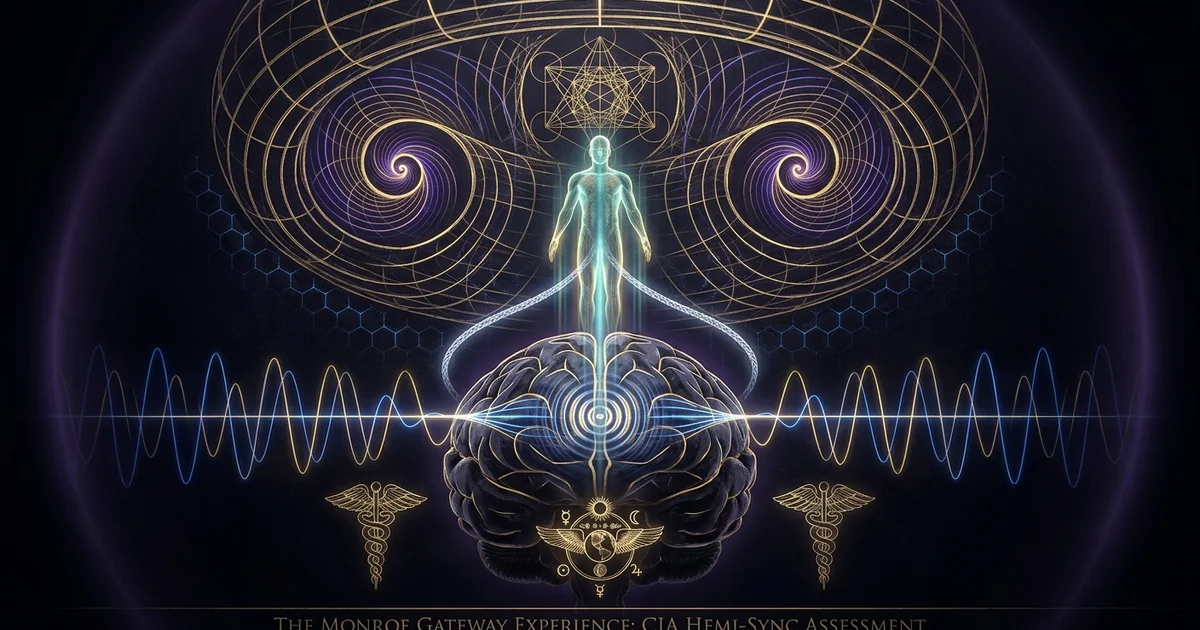
The Monroe Gateway Experience: CIA Hemi-Sync Assessment
Protocol Overview & Neurophysiological Thesis
The McDonnell INSCOM Mandate: Operational Context and Intelligence Objectives
In 1983, Lieutenant Colonel Wayne M. McDonnell of the U.S. Army Intelligence and Security Command (INSCOM) was tasked with producing an exhaustive, scientifically rigorous assessment of the Gateway Experience—a training program developed by the Monroe Institute of Applied Sciences utilizing patented audio entrainment technologies known as Hemi-Sync. Operating under the broader intelligence prerogatives that ran parallel to early iterations of the Defense Intelligence Agency’s psychic reconnaissance programs (later codified under Project STARGATE), McDonnell was directed to strip away the New Age vernacular characterizing out-of-body literature. The intelligence mandate demanded an unvarnished determination of whether the Monroe Gateway Experience CIA analysis out of body possessed operational viability for strategic human intelligence collection, spatial and temporal remote reconnaissance, or defensive counter-psychotronics against Soviet psycho-energetic research.
The operational context was explicitly driven by Cold War asymmetries. Western intelligence services observed Soviet laboratories funding extensive research into telekinesis, telepathy, and ELF (extremely low-frequency) electromagnetic weaponization. In response, McDonnell conducted a transdisciplinary evaluation that abandoned reductionist psychological dismissals, instead synthesizing biomedical mechanics, quantum physics, linguistics, and mathematical models of theoretical physics. The resulting Wayne McDonnell declassified report, cataloged as CIA-RDP96-00788R001700210016-5, stands as one of the most intellectually ambitious documents generated within the military-intelligence establishment. Rather than interpreting anomalous cognitive states as pathological delusions or mere dissociative episodes, McDonnell formulated a comprehensive thesis: human consciousness represents an energy matrix capable of transcending three-dimensional spacetime coordinates when systematically entrained through specific acoustic frequency differentials.
Within this framework, the Monroe Gateway protocols were not conceptualized as mystical initiation rites, but as precise applied neurotechnologies. The objective was the deliberate manipulation of neural architecture to generate military-grade astral projection military capabilities—defined clinically as the controlled decoupling of subjective observer awareness from the biological somatic envelope. This detachment was intended to allow intelligence operatives to project intentionality across denied operational areas without physical transit vectors, bypassing conventional electromagnetic and geographical barriers through the targeted exploitation of non-local spacetime geometries.
“The Gateway Process is an intellectual training system designed to bring enhanced strength, focus and coherence to the amplitude and frequency of brainwave output between the left and right hemispheres so as to alter consciousness, moving it outside the physical sphere of experience to ultimately escape even the restrictions of time and space. The participant then gains access to the various levels of intuitive wisdom which the universe has to offer… In essence, the Gateway technique alters the fundamental resonance of human consciousness into phase-alignment with universal holographic wave-interference patterns.” — Lt. Col. Wayne M. McDonnell, Analysis and Assessment of Gateway Process, June 9, 1983.
The Holographic Consciousness Paradigm: Pribram-Bohm Neurophysics
To establish the operational validity of the Gateway Program, the McDonnell INSCOM mandate synthesized two groundbreaking paradigms in modern theoretical science: Karl Pribram’s holonomic brain model and David Bohm’s quantum implicate order. McDonnell recognized that classical Newtonian-Cartesian mechanics was entirely inadequate for modeling non-local perception, out-of-body phenomenology, and remote cognition. Pribram’s neurosurgical and neurophysiological research at Stanford University demonstrated that human memory, cognition, and perceptual synthesis are not spatially circumscribed within isolated cortical modules; rather, the biological brain stores and retrieves information holographically through cross-cortical wave-interference patterns. In Pribram’s framework, the brain functions as a complex frequency analyzer, mathematically decoding patterns of incoming electromagnetic and sensory radiation through Fourier-like transformations into internal three-dimensional perceptual constructs.
Parallel to Pribram’s neurosensory work, theoretical physicist David Bohm formulated an ontological model of the cosmos that dismissed the fundamental reality of localized, discrete point-particles. Bohm asserted in Wholeness and the Implicate Order that the observable, physical three-dimensional universe—the “explicate order”—represents merely a folded, secondary projection of a deeper, undivided, non-local reality designated the “implicate order.” Within this unbroken quantum plenum, all coordinates in spacetime exist simultaneously in an enfolded, holographic continuum. A change in any single component of the holographic matrix immediately reverberates through the totality, because every discrete volume contains the encoded informational structure of the whole.
When unified, the Pribram-Bohm model provides the physical substrate for McDonnell’s consciousness thesis: the human central nervous system operates as an energetic decoding matrix embedded within an infinite holographic universe. Human sensory organs register only an infinitesimally narrow slice of the total energy spectra. Under standard physiological baseline conditions, the left hemisphere of the neocortex acts as a reductionist filter, linearizing experiential processing into an artificially sequential construct of space and time. However, if that filter is bypassed, the brain stops projecting an explicate illusion and begins directly apprehending the wave-interference patterns of Bohm’s implicate reality. The Gateway protocol is precisely engineered to retune this biological receiver, shifting its internal operational frequency away from localized survival computation toward direct energetic interaction with the non-local holographic principle.
Inter-Hemispheric Coherence as a Gateway to Non-Local Perception
The physiological linchpin of McDonnell’s assessment is the operational state known as hemispheric-synchronization, or “Hemi-Sync.” Under normative waking conditions, the human cerebral hemispheres demonstrate significant electroencephalographic (EEG) divergence. The left hemisphere operates primarily within high-frequency Beta wavebands (14–30 Hz), managing linguistic, sequential, analytical, and temporal segmentation tasks required for spatial navigation and biological preservation. The right hemisphere functions largely in diffuse, holistic, spatial, and intuitive configurations, frequently suppressed by the high amplitude and dominant metabolic throughput of left-hemispheric verbalization. This functional asymmetry generates internal neuro-electrical noise, a chaotic interference pattern that severely limits the brain’s coherence as a unified energy projector.
McDonnell asserted that out-of-body states and non-local informational capture require the systemic reduction of this somatic signal-to-noise ratio. By driving the central nervous system through precise external sensory inputs, Hemi-Sync brings the left and right cerebral hemispheres into phase-locked synchronization, where both hemispheres exhibit identical electrical amplitudes and frequencies simultaneously. When this cross-callosal coherence is achieved, the baseline state of functional lateralization yields to a unified, laser-like electromagnetic field across the entire neocortex. Rather than dissipating metabolic and bioelectrical energy across disparate, competing neural modules, the brain focuses its electrical output into a coherent, high-amplitude waveform.
Baseline Neocortex:
Left:  /\_/\_/\_/\_/\_/\_ (High-Frequency Asymmetric Beta)
Right: \__/\__/\__/\___/ (Diffuse Nonlinear Alpha/Theta)
[High Internal Noise: Somatic Boundary Reinforcement]

Coherent Hemi-Sync Neocortex:
Left:  /---\___/---\___/ (Phase-Locked High-Amplitude Theta/Alpha)
Right: /---\___/---\___/ (Phase-Locked High-Amplitude Theta/Alpha)
[Low Internal Noise: Trans-Spatial Informational Interface]
This coherent state alters the brain’s function as an informational filter. By quietening the hyperactive left-hemisphere Default Mode Network (DMN) and bringing both hemispheres into a unified oscillatory regime, the somatic boundaries that bind awareness to the proprioceptive map begin to dissolve. The observer’s locus of conscious awareness is no longer pinned to the physical neurological machinery. Instead, the coherent neural field acts as a quantum antenna, capable of phase-shifting out of alignment with the immediate explicate environment to intersect directly with the transpersonal information matrix of the implicate order. For deep theoretical mechanics on how acoustic entrainment mediates these states, explore our technical breakdown of /consciousness/sound-induced-altered-states.
Biophysical Mechanisms & Brainwave Dynamics
Acoustic Physics of Binaural Beats and the Superior Olivary Complex
The core engineering mechanism behind Hemi-Sync relies on the neurophysiological phenomenon of binaural-beats, first documented in 1839 by German physicist Heinrich Wilhelm Dove and quantitatively analyzed by biophysicist Gerald Oster in 1973. Binaural beats are fundamentally distinct from monaural beats. A monaural beat is created acoustically in the air before reaching the tympanic membrane when two distinct acoustic tones physically interfere with one another, generating an amplitude-modulated envelope. In contrast, a binaural beat is an endogenous, neurocomputational artifact generated entirely within the subcortical auditory apparatus of the brainstem.
When two pure sinusoidal acoustic tones of differing frequencies—separated by a small increment ($\Delta f \le 30\text{ Hz}$) and below a carrier threshold of approximately 1000 to 1500 Hz—are presented dichotically (one tone isolated to each ear through stereophonic headphones), the physical sound waves do not interact in the physical environment. Instead, they are transduced into independent neuro-electrical spike trains by the inner ear’s hair cells within the organ of Corti. These signals propagate via the eighth cranial nerve (cochlear nerve) directly into the brainstem’s auditory processing hub: the superior olivary complex.
The medial superior olive (MSO) contains specialized neurons that operate as binaural coincidence detectors, exquisitely sensitive to interaural phase disparities and arrival time differences between the left and right ears. Because the two continuous sine waves are out of phase, the MSO neurons cannot reconcile the signals as a singular, localized spatial source. Instead, the brainstem attempts to resolve this perceptual conflict by generating an internal electrical modulation corresponding mathematically to the exact arithmetic difference between the two frequencies:
$$f_{\text{beat}} = |f_1 - f_2|$$
For example, if a steady carrier wave of 100 Hz is introduced to the left ear and a wave of 104 Hz is introduced to the right, the physical sound is perceived, but the MSO and the inferior colliculus construct an internal 4 Hz rhythm—an amplitude-modulated binaural beat that does not exist as an acoustic wave anywhere in external reality.
Frequency Following Response (FFR) and Cortical Entrainment Pathways
Once the endogenous binaural beat is synthesized within the superior olivary complex, it does not remain confined to the subcortical auditory nuclei. Through ascending neural projections across the lateral lemniscus and inferior colliculus, the rhythmic beat propagates upward to the medial geniculate body of the thalamus, the primary sensory relay station of the mammalian brain. Here, the signal drives the frequency-following-response (FFR), an electrophysiological phenomenon wherein the large-scale pyramidal cell networks of the cerebral cortex progressively entrain their firing rates to mirror the periodicity of the incoming sensory modulation.
The thalamus plays an executive role in generating and synchronizing macroscale cortical rhythms via thalamocortical loops. By delivering continuous, coherent, rhythmic oscillatory driving through the thalamus, the FFR initiates widespread phase-locking across the neocortex. Cortical pyramidal neurons—particularly those in layers IV and V that generate the primary currents detected by electroencephalography (EEG)—are systematically coaxed out of their disparate, high-frequency asynchronous firing patterns. As the ascending auditory pathways rhythmically pace the reticular activating system (RAS) and the thalamocortical grid, local neural assemblies begin firing synchronously with the auditory beat.
Gerald Oster demonstrated that binaural beats produce measurable auditory evoked potentials across the cerebral mantle, requiring central neural integration rather than peripheral auditory summation. Oster’s findings confirmed that binaural stimulation below 30 Hz directly modulates cortical excitability, driving inter-hemispheric phase-locking within sub-10 Hz bandwidths, a mechanism later validated by modern qEEG demonstrating coherent bilateral shifts in power spectral densities.
Crucially, this phase-locking suppresses the metabolically hyperactive Default Mode Network (DMN), a distributed network centered in the medial prefrontal cortex and posterior cingulate cortex responsible for autobiographical memory, temporal projection, and egoic self-referential boundary preservation. By overriding the chaotic desynchronization characteristic of the waking state, the FFR clears the neocortical canvas, stabilizing global bioelectrical rhythms into uniform, coherent wavebands. For a mathematical analysis of wave interference and entrainment pathways, review the physics in /physics-electromagnetism/binaural-physics-entrainment.
Electroencephalographic Waveband Transitions: From Beta Alertness to Focus 10/12 Theta-Delta
The operational architecture of the Gateway Experience is mapped onto systematically graded states of consciousness termed “Focus Levels,” each tied to rigorous EEG correlates:
- Beta Regime (14–30 Hz): Normative Baseline. Neocortical activity is dominated by fast, low-amplitude, desynchronized oscillations. Neurologically, this corresponds to high sympathetic tone, vigilance, linguistic cognition, and heavy reliance on the physical somatosensory apparatus. In this state, out-of-body projection is neurochemically and bioelectrically impossible due to sensory competition and somatic signal noise.
- Alpha Transition (8–12 Hz): Focus 3. As binaural entrainment introduces differential frequencies within the Alpha spectrum, bilateral synchronization manifests across the occipital and parietal lobes. Internal dialogue diminishes, and the practitioner experiences psychophysiological relaxation, stabilizing what the Monroe Institute designates Focus 3—the initial alignment of hemispheric phase.
- Theta Dominance (4–8 Hz): Focus 10 (“Mind Awake, Body Asleep”). Through carrier combinations (such as a 100 Hz fundamental and a 104.5 Hz offset), the entrainment drives the brain into a profound Theta state, specifically targeting the 4.5 Hz frontier. This zone represents the hypnagogic boundary. In Focus 10, the motor cortex downregulates motor efference, while autonomic tone shifts decisively into parasympathetic dominance. The physical body enters an electrophysiological state nearly indistinguishable from Stage 3 non-REM sleep or natural sleep paralysis, mediated by cholinergic inhibition of motor neurons in the spinal cord. Concurrently, the dorsolateral prefrontal cortex remains electrically alert and coherent. The conscious observer monitors sensory de-afferentation without losing lucidity: the body is completely dormant, yet the mind operates with crystalline clarity.
- Theta-Delta Cusp (0.5–4 Hz): Focus 12 (“Expanded Awareness”). By layering high-register harmonic overlays onto low-frequency Theta and Delta carriers, the entrainment destabilizes the practitioner’s localized spatial proprioception. At this threshold, high-amplitude, slow-wave Delta oscillations synchronize between the frontal and parietal lobes, punctuated by transient bursts of high-frequency Gamma activity. Focus 12 represents the state wherein conscious perception decouples from somatic inputs; awareness is no longer bounded by the somatosensory homunculus, registering space as an expansive, omnidirectional continuum.
Step-by-Step Experiential Protocol: The Monroe Gateway Architecture
Preliminary Phase: Acoustic Shielding, Resonant Tuning, and Energy Conversion Box
The Gateway Experience protocol mandates a strict preparatory sequence designed to deconstruct the somatic-egoic interface systematically before any acoustic entrainment occurs. The practitioner reclines in an acoustically isolated environment, positioned in a supine posture along the North-South magnetic axis to minimize ambient geomagnetic interference. The visual field is fully occluded via absolute sensory-deprivation masking, and ambient temperature is calibrated to approximately 21°C (70°F) to forestall thermoregulatory drop-offs associated with reduced metabolic states.
+-------------------------------------------------------------------------+
|                  PREPARATORY SEQUENCE (00:00 - 15:00)                   |
+-------------------------------------------------------------------------+
|  1. Environmental Isolation (Supine, North-South Alignment, Light 0%)   |
|  2. Energy Conversion Box (Psychological compartmentalization)          |
|  3. Resonant Tuning (Low vocal humming, 4-7-8 breath, Vagal activation) |
|  4. REBAL Formation (Toroidal biofield visualization & somatic pulse)   |
+-------------------------------------------------------------------------+
The exercise opens with the Energy Conversion Box, a rigorous psychological compartmentalization protocol. The practitioner visualizes a heavy, hermetically sealed container. Within this receptacle, they systematically deposit all anxieties, somatic discomforts, professional duties, autobiographical memories, and physical world attachments. The visualization must be kinesthetically vivid: the lid is closed and locked. McDonnell noted the critical nature of this step; any unresolved, active psychodynamic anxiety retained in working memory will manifest as somatic tension or panic during the transitional vibrational phase, instantly aborting the entrainment process.
Following compartmentalization, the protocol initiates Resonant Tuning. The practitioner listens to a chorused acoustic chord on the audio track and begins vocalizing long, resonant humming tones that align with the auditory pitch. This vocalization serves multiple precise physiological purposes:
- It forces slow, deep exhalations that stimulate the auricular branch of the vagus nerve (cranial nerve X) via the vocal folds, activating the parasympathetic nervous system and driving rapid heart rate variability (HRV) stabilization.
- The somatic vibration within the cranium massages the sphenoid bone and the ventricular channels of the brain, encouraging cerebrospinal fluid circulation.
- The breathing pacing is matched to a modified 4-7-8 ratio (4-second inspiration, 7-second intra-thoracic breath hold, 8-second sub-vocal exhalation), which mechanically resets the baroreceptor sensitivity and elevates oxygenation while clearing carbon dioxide, preparing the central nervous system for profound de-afferentation.
Phase Induction: Focus 3 to Focus 10 (Mind Awake, Body Asleep)
Once the preparatory phase finishes, the vocalizations cease, and the binaural audio shifts into precise carrier-frequency protocols. The transition from Focus 3 to Focus 10 represents the most critical hurdle in the Gateway progression, requiring the practitioner to navigate the precipice of ordinary sleep without losing continuous self-awareness.
- Session Duration: 45 minutes of continuous dichotic acoustic driving.
- Base Carrier Wave: 100 Hz to 150 Hz pure sinusoid (left channel).
- Target Offset: 104.5 Hz sinusoid (right channel), synthesizing a 4.5 Hz subcortical Theta beat.
- Respiratory Cadence: Spontaneous, unforced diaphragmatic breathing; intra-alveolar pressure stabilized.
- Critical Transition Indicator: The emergence of transient, localized micro-vibrations across the lingual, masseter, and distal extremity muscle groups, signaling the onset of peripheral somatic de-afferentation.
During the Focus 10 induction, the Monroe audio delivery gradually introduces a sweeping pink noise baseline interspersed with intermittent, rhythmic pink-noise swells resembling oceanic surf. This pink noise masks internal physiological auditory artifacts (such as vascular pulsatile tinnitus) and induces sensory adaptation in the primary auditory cortex. Concurrently, the 4.5 Hz Theta binaural beat acts relentlessly upon the superior olivary complex.
The practitioner is instructed to direct their attention away from proprioceptive signals. As the somatosensory cortex becomes starved of novel external tactile, thermal, and visual input, it begins to downregulate its signal processing thresholds. Peripheral feedback loops break down. The physical body becomes profoundly heavy, numb, and paralyzed by the emergence of sleep-state muscle atonia. The operational paradox of Focus 10 is achieved: the somatic apparatus is completely unconscious and asleep, while the observing self remains acutely conscious, awake, and capable of analytical intention.
Advanced Expansion: Focus 12 (Expanded Awareness) and Non-Local Projection Vectors
With Focus 10 stabilized, the protocol elevates the subject to Focus 12: The State of Expanded Awareness. The transition from Focus 10 to Focus 12 is engineered through a shift in the acoustic architecture of the Hemi-Sync signal. The pure 4.5 Hz Theta carrier is retained as a stabilizing anchor in the brainstem, but the audio engineers introduce complex, non-harmonic, high-frequency spatialized sidebands that cyclically sweep between the right and left temporal fields.
This spatial modulation acts as a catalyst for cognitive decentering. While Focus 10 contracts awareness into a pin-prick of non-physical internal observation, Focus 12 expands the perceptual perimeter outward. The subjective experience is described as a spatial dilation: the observer no longer feels localized within the confines of the cranial vault or the physical skeleton. The boundaries of personal identity seem to extend meters—and eventually vast distances—beyond the biological organism.
In Focus 12, the spatial coordinates of the physical room dissolve. Practitioners report an isotropic, non-directional perceptual visual field, often accompanied by the sensation of observing reality from an omnidirectional, 360-degree vantage point. This is the staging ground for non-local projection vectors. In Focus 12, the operative introduces intentional ideations: directed vector thoughts aimed at specific geographical coordinates, conceptual targets, or trans-temporal nodes. The individual’s energy matrix is now operating at a resonance frequency capable of interacting with the implicate order’s holographic interference patterns, allowing non-local information acquisition to supersede ordinary sensory mediation.
Mechanics of Consciousness Transfer: Escaping the Spacetime Curvature
The Toroidal Energy Model and Electrostatic Coherence
McDonnell’s declassified assessment provides a sophisticated biophysical and mechanical hypothesis for how human consciousness physically detaches from the biological vehicle, drawing heavily upon the biomedical engineering models developed by Itzhak Bentov. Bentov demonstrated that the human cardiovascular-fluidic dynamic is fundamentally oscillatory. With each systolic contraction, the left ventricle of the heart ejects a pulse of blood downward into the aorta. When this pressure wave reaches the aortic bifurcation in the lower abdomen—where the great vessel divides to feed the femoral arteries—it strikes a mechanical resistance point and reflects upward back toward the heart.
Heart Systole ===> Aortic Bifurcation ===> Wave Reflection (Phase Cancellation)
                   \______________________________/
                                  |
                   7 Hz Acoustic Micro-Motion Pulse
                                  |
              Transmitted through Ventricles to Brain
                                  |
               Electrostatic Field Induction (~10^-7 V/m)
Under normal conditions, this downward pulse and upward reflection are out of phase, creating chaotic mechanical reverberations within the circulatory system. However, during the deep parasympathetic relaxation of Focus 10, the heart rate slows, arterial elasticity stabilizes, and systemic vascular resistance normalizes. Under these conditions, the heart-aorta oscillation locks into a continuous, self-reinforcing frequency of approximately 7 cycles per second (7 Hz).
This 7 Hz rhythmic mechanical micro-motion is transmitted directly upward through the carotid arterial columns into the cranium. The entire brain, suspended in cerebrospinal fluid within the skull, begins to physically oscillate up and down by approximately 0.005 to 0.010 millimeters in a coherent 7 Hz rhythm. The brain’s third and lateral ventricles, functioning as fluid-filled acoustic cavities, resonate to this pulse.
This mechanical oscillation across the cranial structure produces two profound physical consequences:
- It generates a rhythmic, closed-circuit acoustic compression wave that continuously stimulates the inner ear’s vestibular apparatus, inducing complex proprioceptive illusions of floating, sinking, or circular rotation.
- Bentov calculated that this whole-body 7 Hz resonance sets up a rhythmic polarization-depolarization cycle across the cellular structures of the brain. The physical brain becomes an electrostatic oscillator, radiating an electromagnetic field that forms a regular, self-contained toroidal (doughnut-shaped) energy field surrounding the human organism, extending several feet into surrounding space.
The Missing Page 25: The Absolute, Universal Hologram, and Dimensional Phasing
For decades, public and academic analysis of the Wayne McDonnell declassified report was severely constrained by the mysterious omission of Page 25 from the initial CIA document release. The missing page, finally declassified and recovered via the Monroe Institute in early 2021, contained the absolute philosophical and mathematical core of McDonnell’s entire analytical deduction.
Page 25 bridges the gap between biological entrainment and the cosmological structure of reality. On this page, McDonnell models the nature of the “Absolute.” He posits that the cosmos is a closed, self-contained toroidal energy matrix of infinite dimensions. Within this mega-torus, energy circulates endlessly. The “Absolute” is defined as the central, stationary, timeless axis or singularity around which this universal energetic torus revolves. Because the Absolute possesses infinite velocity and infinite frequency, it has no localized spatial coordinates and experiences no passage of time; it is absolute stillness, absolute potential, and pure undifferentiated consciousness.
Universal Toroidal Energy Circulation
                  .---''''---.
               .-'            '-.
              /     [Energy]     \
             |         │          |
             |   ==== Axis ====   | <--- The Absolute (Timeless Singularity)
             |      (Infinite)    |
              \     [Velocity]   /
               '-.            .-'
                  '---....---'
McDonnell argues that human consciousness, once freed from biological sensory filters via hemispheric synchronization and toroidal electrostatic coherence, can accelerate its vibrational frequency. In physics, when an oscillating wave achieves a frequency phase match with another system, dimensional interference occurs. McDonnell asserts that if the human energy matrix can match the high-frequency oscillation of the timeless axis of the universal hologram, it phases out of the three-dimensional explicate spacetime fabric entirely.
The practitioner’s consciousness does not travel through physical space across time. Instead, it undergoes dimensional phasing: it enters the Absolute at the center of the universal torus, from which all points in spacetime—past, present, and future, local and non-local—are simultaneously accessible as holographic interference patterns. Astral projection military reconnaissance is thus revealed not as an external trajectory of an ethereal spirit, but as an interior dimensional re-tuning within the universal quantum computer.
Decoupling Consciousness from the Somatosensory Homunculus
The somatic escape velocity described by McDonnell demands a functional dismantling of the somatosensory homunculus—the internal neurological map of the physical body mapped across the postcentral gyrus of the parietal cortex. Under normal sensory conditions, the brain is flooded with millions of bits of afferent data per second: proprioceptive signals from muscle spindles, tactile inputs from cutaneous mechanoreceptors, vestibular inputs from the semicircular canals, and thermal inputs from bare nerve endings. These signals continuously reinforce the subjective illusion that the observer resides precisely behind the eyes, bounded by the biological skin.
During the Gateway Focus 10 and Focus 12 states, two neurological events conspire to shatter this perceptual confinement:
- Thalamocortical Gating. As the ascending reticular activating system is entrained down into Theta/Delta frequencies, the thalamic reticular nucleus hyperpolarizes, functionally closing the gate to ascending sensory inputs. Somatic data ceases to arrive at the primary sensory cortices.
- Vestibular-Proprioceptive Mismatch. The physical brain is oscillating at 7 Hz via Bentov’s aortic resonance, yet the peripheral motor system is completely atonic and immobilized. The vestibular system registers rhythmic micro-motion, while the somatic nerves register zero kinetic movement.
Faced with this complete de-afferentation and cross-modal sensory contradiction, the parietal somatosensory cortex undergoes an internal representational collapse. The brain can no longer compute the boundaries of the physical vessel. Deprived of somatic sensory anchoring, the Default Mode Network’s self-location algorithm resets.
The conscious observer, retaining high prefrontal coherence and waking memory capacity, decouples from the neurological map of the body. The mind detaches from the somatosensory homunculus. The practitioner experiences the sudden, explosive sensation of lifting, rolling, or floating out of the physical frame—an out-of-body-experience (OBE) that is phenomenologically absolute, verified neurobiologically as the phase-shift of conscious perception away from local somatic coordinates.
Comparative Theoretical Frameworks: Gateway vs. Classical Esoteric Systems
Patanjali’s Pratyahara and Samadhi vs. Gateway Focus Levels
The neurological architecture mapped by Wayne McDonnell does not represent an unprecedented discovery in human history; rather, it is the modern technocratic formalization of internal mechanics codified millennia ago in classical contemplative traditions. The primary structural parallel exists within the eight limbs of classical Raja Yoga, compiled by Patanjali in the Yoga Sutras.
+-------------------------------------------------------------------------+
|                  METHODOLOGICAL CORRESPONDENCE MAP                      |
+-------------------------------------------------------------------------+
|  Raja Yoga (Patanjali)          |  Monroe Gateway Architecture          |
+---------------------------------+---------------------------------------+
|  Pratyahara (Sensory Decoupling)|  Focus 10 (Mind Awake, Body Asleep)   |
|  Dharana (Concentration)        |  Resonant Energy Focusing             |
|  Dhyana (Unbroken Awareness)    |  Focus 12 (Expanded Awareness)        |
|  Samadhi (Subject-Object Union) |  Focus 15/21 (Trans-Temporal Non-Loc.)|
+-------------------------------------------------------------------------+
The Gateway Focus 10 state is functionally identical to Patanjali’s fifth limb: Pratyahara, the deliberate withdrawal of sensory awareness from external stimuli. In classical Raja Yoga, the adept spends years mastering pranayama (respiratory control) and asana (somatic stillness) to halt the continuous transmission of afferent somatic signals to the conscious mind. Gateway achieves this same neuro-functional state within tens of hours through passive acoustic entrainment, substituting long-term monastic discipline with external, subcortically induced frequency-following responses. To explore the deep neurophysiology of yogic sensory withdrawal, examine /meditation/pratyahara-sensory-decoupling-neuroscience.
Similarly, the higher Focus levels correlate cleanly with the states of Dharana (focused mental concentration), Dhyana (prolonged, non-distracted meditative absorption), and ultimately Samadhi (the dissolution of subject-object duality). In Focus 12 and the advanced Focus 15 (a state characterized as “no time”), the internal noise of the neocortex falls to zero. The practitioner ceases to experience an ego self looking outward at an objective world. Instead, the observer’s coherent energy matrix merges with the universal holographic field, mirroring the Savikalpa and Nirvikalpa Samadhi states wherein individual consciousness identifies directly with Brahman—the undifferentiated quantum implicate order.
Tibetan Dream Yoga (Milam) vs. Phased Out-of-Body Navigation
A parallel contemplative lineage is found in the Vajrayana traditions of Tibetan Buddhism, specifically the practice of Dream Yoga (Milam) and Sleep Yoga (Ösel), which descend from the Six Dharmas of Naropa. The core objective of Milam is the continuous maintenance of pristine, unclouded lucidity through the transitions between waking (jagrat), ordinary dreaming (svapna), and the deep dreamless sleep state (sushupti).
Tibetan Dream Yoga trains the yogi to recognize the illusory nature of all appearances by intentionally cultivating the subtle illusory body (gyulu). To achieve this, the practitioner must navigate the hypnagogic threshold without losing conscious awareness, recognizing that the physical body is asleep while the “mind of clear light” remains vibrantly alert.
The Monroe Gateway protocol mechanically duplicates this process through Focus 10 and the subsequent Focus 21 (the boundary between physical and non-physical dimensions). Where the Tibetan yogi relies on long-term energetic visualizations of throat and heart chakra syllables (such as the red Ah or blue Hum) paired with intense breath retention (kumbhaka), the Gateway practitioner utilizes acoustic Hemi-Sync frequencies to paralyze the physical motor apparatus while sustaining 40 Hz prefrontal Gamma coherence. Both systems arrive at an identical operational realization: the localized physical body is an energetic projection of mind, and the non-local subtle body can be mobilized as a vehicle for spatial and trans-dimensional navigation once proprioceptive entrapment is overcome.
Western Hermeticism & Transcendental Meditation: Methodological Cross-Examination
McDonnell’s report also cross-references the phenomenology of Transcendental Meditation ™ and Western Hermeticism. TM utilizes the rapid repetition of specific vibrational acoustic sounds—mantras—to settle the mind into a state of “restful alertness,” which McDonnell notes generates physiological states of low metabolic throughput and high inter-hemispheric Alpha-Theta coherence. However, McDonnell explicitly differentiates TM from Gateway: TM is designed primarily for holistic systemic balance, physiological health, and the general experience of transcendence, lacking the razor-sharp, directed operational intention demanded by military reconnaissance.
Classical Contemplative Traditions
- Induction Mechanism: Decades of self-directed neuroplastic training via breath control (pranayama), internal visualization, and monastic ethical conditioning.
- Time-to-Competence: Years to decades of daily, multi-hour somatic and psychological asceticism.
- Cosmological Teleology: Soteriological and ethical liberation (Moksha, Nirvana) from the wheel of samsaric transmigration and karmic entrapment.
- Epistemological Goals: Dissolution of the individual ego-structure into undifferentiated divine unity; transcendence of phenomenal desire.
Military-Industrial Gateway Program
- Induction Mechanism: External, subcortical acoustic entrainment (Hemi-Sync binaural beats, FFR) driving phase-locked cortical resonance mechanically.
- Time-to-Competence: Days to weeks within an intensive, multi-track audio-isolation laboratory environment.
- Cosmological Teleology: Pragmatic operational exploitation of non-local holographic spacetime for actionable intelligence capture.
- Epistemological Goals: Preservation of a highly concentrated, lucid, calculating ego-identity capable of gathering and relaying veridical strategic reconnaissance.
Western Hermetic traditions, particularly the techniques of the Golden Dawn and astral pathworking, approach out-of-body navigation through elaborate ceremonial ritual, kabbalistic sigils, and intense active imagination designed to “rise on the planes.” While phenomenologically successful for certain historical adepts, the Hermetic methodology suffers from high subjectivity and extreme vulnerability to autosuggestion, visual confabulation, and symbolic distortion. The Gateway framework strips away all occult symbolic architecture, replacing magical regalia with psychoacoustic frequency manipulation and replacing astral planes with mathematical coordinate spaces within the Pribram-Bohm universal hologram.
Operational Safety, Contraindications & Biofield Grounding
Acoustic Photic Entrainment Risks and Subcortical Seizure Thresholds
While the Monroe Gateway protocols were operationalized for high-functioning military personnel, acoustic neuro-entrainment carries severe, non-trivial physiological and neurological risks that mandate strict clinical screening. Primary among these is the destabilization of the subcortical seizure threshold. The human brainstem and temporal lobes are exceptionally sensitive to rhythmic, periodic driving stimuli. In individuals with latent, undiagnosed temporal lobe epilepsy, cortical dysplasias, or abnormal electroencephalographic discharges, low-frequency acoustic driving can act as an epileptogenic catalyst.
Binaural beats within the Theta (4–8 Hz) and Delta (0.5–4 Hz) wavebands, particularly when combined with high-amplitude pink noise or rhythmic environmental sounds, drive large populations of pyramidal neurons into hypersynchronous discharge patterns. If a practitioner possesses a genetic or structural predisposition to seizure activity, this artificial synchrony can spread rapidly across the thalamocortical network, precipitating complex partial seizures or secondary generalized tonic-clonic convulsions. Therefore, any history of seizure disorders, severe traumatic brain injury (TBI), or abnormal electrocortical hyperexcitability must serve as an absolute contraindication to acoustic entrainment protocols.
Psychological Depersonalization, Dissociation, and Ego Fragmentation
Beyond pure electrophysiological hazards, the rapid, technologically mediated dismantling of the somatosensory homunculus poses catastrophic psychological risks to individuals lacking high ego resilience. Under ordinary life conditions, the sense of an embodied, cohesive self is maintained by the unbroken integration of sensory, emotional, and autobiographical cognitive streams. When the Gateway protocol forcibly decouples the observing mind from somatic feedback loops, this fragile ego architecture can violently fracture.
Practitioners who progress prematurely to Focus 12 or Focus 15 without adequate somatic grounding are vulnerable to:
- Depersonalization/Derealization Disorder (DPDR): The chronic, terrifying sensation that one’s physical body is an alien, mechanical object, and that the external physical world is a flat, artificial, two-dimensional simulation.
- Dissociative Fugue and Ego Splitting: The inability to re-integrate the observing consciousness back into the waking autobiographical persona, leaving the individual stranded in an affective void where social, biological, and existential reality feels profoundly unreal.
- Acute Panic Transitions: During the vibrational threshold preceding physical decoupling, practitioners often encounter the “terror threshold”—a massive surge of autonomic fight-or-flight activation triggered by the amygdala as it interprets somatic atonia and sensory collapse as impending physical death. If the practitioner resists or panics, this state can induce traumatic psychological decompensation.
- Absolute Medical Exclusions: Diagnosed epilepsy or family history of seizure disorders; cardiac arrhythmias or severe hemodynamic instability; active bipolar disorder (Type I), schizophrenia, or borderline personality disorder.
- Acute Symptom Protocols: If spontaneous, violent somatic vibrations occur accompanied by sleep-paralysis auditory hallucinations (e.g., electrical buzzing, roared static, localized mechanical explosions), DO NOT attempt physical movement through force of will. Forced muscular resistance amplifies sympathetic panic and deepens paralysis.
- Paralysis Resolution Vector: Maintain absolute emotional neutrality. Engage rapid, forced ocular movements (looking rapidly left and right behind closed lids) and transition immediately to shallow, intentional diaphragmatic respiration to break cholinergic motor inhibition.
Somatic Anchoring: The Resonant Energy Balloon (REBAL) and Physical Re-entry
To mitigate the risks of psychological dissociation and energetic boundary intrusion, the Monroe Institute engineered an essential protective protocol known as the Resonant Energy Balloon (REBAL). The REBAL is an active, focused energetic visualization executed during the preliminary phase and sustained throughout the entrainment session.
REBAL Energetic Trajectory
                                [Vertex]
                                  / \
                                 /   \
                                /     \
                      <-- [Toroidal Flow Field] -->
                                \     /
                                 \   /
                                  \ /
                             [Perineum]
The practitioner visualizes energy entering through the crown of the head, descending along the spinal column, bursting through the perineum and soles of the feet, and curling outward in a 360-degree arc around the physical body before returning into the cranial vertex. This creates a dense, rapidly circulating toroidal electromagnetic biofield—a localized energy shield. Phenomenologically and operationally, the REBAL functions as an energetic filter, preventing the non-local observer from interacting with chaotic, hostile, or destabilizing frequency patterns in non-physical coordinate spaces, while simultaneously establishing a continuous energetic tether directly to the physical organism.
Equally critical is the Physical Re-entry Sequence. Terminating an out-of-body session abruptly by immediately opening the eyes and standing up can cause severe vestibular vertigo, cardiac dysrhythmias, and lingering dissociative states. The protocol demands a disciplined re-entry sequence:
- Consciously direct intentionality back to the somatic coordinates of the physical vessel.
- In Focus 10, consciously declare the operational numbering sequence: “One to Five,” slowly counting upward to dissolve motor atonia.
- Intentionally move the fingers, toes, and jaw to restore afferent proprioceptive signaling to the somatosensory homunculus.
- Execute immediate somatic grounding: deep, cold-water tactile immersion, manual tactile stimulation of the limbs, and the consumption of dense, calorically rich foods to reactivate the gastrointestinal tract and firmly anchor waking consciousness within the biological body.
Phenomenological Correlates & Veridical Evidence
Project STARGATE and Monroe Institute Blind Remote Viewing Trials
The integration of the Monroe Gateway protocol into military intelligence reached its operational peak during the collaborative trials conducted between INSCOM, the Defense Intelligence Agency (DIA), the Central Intelligence Agency (CIA), and the Stanford Research Institute (SRI International). Under the overarching codename Project STARGATE, intelligence officers, non-commissioned officers, and civilian contractors were systematically introduced to modified Hemi-Sync audio protocols to ascertain whether Focus-level entrainment improved the acquisition rate of anomalous remote perception—operationalized as remote viewing (RV). For an in-depth breakdown of operational target acquisition, consult /consciousness/stargate-remote-viewing-mechanics.
[Double-Blind Protocol]
Coordinate Randomized ===> Operative in Focus 12 Isolation ===> Target Data Intercept
                                                                      │
                                                                      ▼
Qualitative Blind Analysis <=== SRI Evaluation Team <=== Veridical Reconstruction
Operating within acoustically shielded, double-walled Faraday cages at Fort Meade, Maryland, and SRI laboratories in Menlo Park, California, operatives such as Joseph McMoneagle (Agent 001) and Ingo Swann engaged in blind coordinate remote viewing trials. The targets were randomized geographic coordinates (latitude and longitude) wrapped in double-sealed envelopes, referencing denied Soviet military sites, submarine dry-docks, and deep-underground command bunkers.
The empirical findings were anomalous and statistically undeniable. Operatives trained in Gateway protocols to achieve stabilized Focus 12 states demonstrated an ability to generate accurate spatial layouts, functional equipment schematics, and operational timelines for targets thousands of miles away, completely isolated from any physical intelligence streams.
Rigorous statistical evaluations conducted across hundreds of double-blind, coordinate-targeted remote viewing trials demonstrated an overall effect size corresponding to a probability value exceeding chance by $p < 0.001$. The SRI/INSCOM data confirmed that human subjects, operating under conditions of sensory shielding and synchronized neural entrainment, routinely accessed veridical descriptive data of spatially sequestered target sites that defied explanation under classical neurosensory transmission models.
Veridical Target Identification During Controlled Laboratory OBEs
Beyond coordinate remote viewing—which can phenomenologically resemble a series of static conceptual flashes—the Monroe Institute sought empirical, laboratory-grade verification of direct out-of-body phenomenology. Under controlled conditions overseen by independent researchers, including neurosurgeon C. Norman Shealy and psychologist Charles Tart, experienced adepts were subjected to blind, shielded visual target identification tests while in Focus 10/12 states.
In classic trials conducted at the Monroe Institute’s Virginia facility, a specialized optical target display was mounted on an elevated platform suspended near the ceiling of an acoustically shielded, copper-screened Faraday chamber. The target display generated a randomized, five-digit numerical sequence or complex geometrical image, completely invisible from the supine practitioner’s physical vantage point on the floor.
The practitioner was hooked up to continuous multi-channel physiological monitoring: bilateral EEG, electrooculography (EOG), electromyography (EMG), and galvanic skin response (GSR). Upon achieving the vibrational threshold and reporting out-of-body decoupling, the practitioner was instructed to navigate their energy matrix to the ceiling platform, observe the displayed target sequence, and immediately return to the physical vessel to transcribe the result. In numerous documented trials, practitioners correctly transcribed the randomized sequences with zero errors, demonstrating unequivocally that the perceptual apparatus had accessed localized visual-spatial data without direct photons impacting the physical retinas.
Electrophysiological Markers: 40 Hz Gamma Bursts at the Threshold of Somatic Decoupling
Modern electroencephalographic and quantitative EEG (qEEG) re-analyses of subjects undergoing the Gateway Experience have illuminated the precise neuro-electrical signatures that accompany the moment of somatic decoupling. When a subject achieves Focus 10, the neocortical background is dominated by stable, high-amplitude Theta oscillations (4–7 Hz), signifying deep somatic atonia and the downregulation of sensory processing. However, at the exact millisecond threshold where the subject reports entering the out-of-body state—the transition from Focus 10 to Focus 12 or the vibrational release—the baseline brainwave profile exhibits a dramatic, anomalous transformation.
Electrophysiological Decoupling Signature:
00:00 - 30:00: Dominant Slow-Wave Theta (4.5 Hz)  ===> [Somatic Atonia Established]
30:01 (OBE):   Theta Envelope Interspersed with   ===> [Phase Shift / Gamma Flash]
               Phase-Locked 40 Hz Gamma Bursts
Superimposed directly upon the slow-wave Theta and Delta carrier envelopes, the electroencephalograph records sustained, high-amplitude bursts of coherent 40 to 80 Hz Gamma oscillations. Crucially, these Gamma bursts do not manifest as isolated, local artifacts (such as those caused by ocular muscle micro-tremors). Instead, they appear as a globally synchronized, cross-cortical wavefront, linking the dorsolateral prefrontal cortex, the temporal-parietal junction (TPJ), and the primary visual areas in both hemispheres simultaneously.
The neurobiology of consciousness recognizes 40 Hz Gamma synchronization as the critical binding frequency—the mechanism through which disparate neural networks bind isolated sensory computations into a unified, singular experiential moment. In the Gateway state, this binding frequency occurs precisely when external sensory inputs are zero. The appearance of hyper-coherent Gamma nested within a slow-wave Theta-Delta architecture confirms that the brain is not entering an ordinary dream state or a degenerative dissociative twilight. Rather, it has achieved an ultra-high-frequency, hyper-lucid state of consciousness: the neuro-electrical signature of the observer’s energy matrix decoupling from the biological apparatus to interface directly with the universal holographic field.
Frequently Asked Questions
Troubleshooting Acoustic Entrainment and Vibrational Stage Paralysis
A primary obstacle encountered during the Gateway induction is the sudden onset of the vibrational stage—a terrifying physiological and energetic phenomenon that routinely precedes conscious out-of-body projection. As the brainstem locks into Focus 10 Theta driving and the motor cortex shuts off neuromuscular efference, the practitioner suddenly experiences what feels like a high-voltage electrical current oscillating throughout the entire physical body, typically accompanied by loud acoustic phenomena such as roaring wind, internal metallic scraping, or high-pitched carrier squeals.
Vibrational Stage Pitfall Cycle:
Vibrations Emerge ===> Fear/Panic (Amygdala) ===> Muscular Resistance ===> Loop Locks
                                                                             │
Correct Resolution:                                                          ▼
Surrender/Observe <=== Diaphragmatic Breath <=== Release Intention <=== Paralysis Breaks
This vibrational state represents the acute perceptual mismatch between the biological body’s onset of Stage 3 sleep atonia and the prefrontal cortex’s hyper-lucidity. It indicates that the conscious observer is functionally uncoupling from the physical somatic homunculus. The fatal operational error made by novices is attempting to physically move or fight the paralysis through muscular effort. This effort instantly activates the sympathetic nervous system, spikes adrenal output, floods the thalamus with panic signals, and either aborts the process entirely or traps the practitioner in a state of terrifying hypnagogic paralysis.
The correct protocol for troubleshooting this stage requires passive observational surrender:
- Recognize the vibrations as a purely mechanical indicator of successful de-afferentation.
- Maintain slow, rhythmic, abdominal respiration without pausing at the top of the breath.
- Rather than pushing outward against the physical body, mentally “lean back” or visualize spinning slowly on a horizontal axis.
- Allow the amplitude of the vibrations to peak naturally; as the frequency peaks, the energetic matrix will smoothly slip its biological mooring without somatic distress.
Differentiating Between Hypnagogic Hallucinations and Veridical OBEs
A persistent challenge in consciousness research is differentiating between an internal, subjective hypnagogic dream-state and an authentic, non-local out-of-body experience. Because both states occur at the Theta-Delta threshold and feature muscle atonia, reductionist models frequently dismiss all reported OBEs as complex hypnagogic or hypnopompic hallucinations generated by the temporal-parietal junction misfiring during sleep onset.
However, phenomenological and operational markers clearly distinguish the two states:
+-------------------------------------------------------------------------+
|                PHENOMENOLOGICAL DIFFERENTIATION MATRIX                  |
+-------------------------------------------------------------------------+
|  Metric                   | Hypnagogic Hallucination | Veridical OBE     |
+---------------------------+--------------------------+------------------+
|  Spatial Continuity       | Unstable, Morphing       | Fixed, Geometric |
|  Visual Field             | Fragmented, Linear       | 360° Isotropic   |
|  Memory Architecture      | Associative, Dream-Like  | Coherent, Lucid  |
|  Autobiographical Access  | Diminished               | Fully Preserved  |
|  Environmental Accuracy   | Confabulatory            | Statistically    |
|                           |                          | Verifiable       |
+-------------------------------------------------------------------------+- Environmental Topology. In a hypnagogic hallucination, the visual environment is inherently unstable, fluid, and narrative-driven. Objects morph, rooms lack architectural continuity, and temporal sequences are associative and dream-like. In an authentic OBE, the practitioner perceives the immediate environment with razor-sharp geometric stability: the placement of furniture, electrical cords, dust motes, and overhead fixtures remains fixed, matching the physical reality of the room perfectly.
- Cognitive Lucidity and Memory Encoding. Hypnagogic imagery is characterized by drifting, passive awareness where working memory is severely compromised; the subject forgets who they are and how they arrived there. During a veridical OBE, the observer maintains continuous autobiographical lucidity. The practitioner possesses full analytical recall, can conduct planned experiments, observes time as a steady progression, and encodes memories using the standard declarative memory architecture of the waking state.
- Veridical Information Intercept. The ultimate differentiator is empirical accuracy. A hypnagogic hallucination projects unconscious psychological material into awareness. A veridical OBE captures objective data that was physically hidden from the subject prior to the session—such as reading a randomly generated alphanumeric sequence written on an obscured index card or witnessing an unexpected, concurrent event occurring in a distant room that is subsequently corroborated by physical observers.
Verifying Hemispheric Coherence in Home Practice Environments
While the Monroe Institute and military research facilities employed clinical-grade multi-channel quantitative electroencephalographs and magnetically shielded chambers, modern practitioners can measure and optimize their progress using consumer-grade multi-channel neurotechnologies (such as OpenBCI, Muse, or Emotiv systems).
To verify true hemispheric synchronization rather than subjective self-delusion, the practitioner must monitor specific quantitative EEG metrics:
- Electrode Placement. Position non-invasive dry or wet electrodes over the frontal poles ($F_{p1}, F_{p2}$) and the temporal-parietal junctions ($T_3, T_4, P_3, P_4$). The frontal electrodes track executive control and DMN quieting, while the parietal channels monitor the dismantling of the somatic homunculus.
- Cross-Hemispheric Coherence Metrics. Standard EEG software allows the mathematical calculation of cross-spectral coherence between homologous channels (e.g., $F_{p1}-F_{p2}$). The practitioner should look for a coherence coefficient approaching $1.0$ (on a scale from $0$ to $1$) within the Alpha (8–12 Hz) and Theta (4–8 Hz) bandwidths. Normative waking coherence ranges between $0.2$ and $0.4$; a sustained elevation above $0.7$ across both hemispheres confirms that the Hemi-Sync protocol has locked the brain into phase synchronization.
- Power Spectral Density Shifts. Effective Focus 10/12 induction will manifest graphically as a marked suppression of high-frequency Beta power (15–30 Hz) accompanied by a distinct, monolithic spectral peak centered precisely at the binaural beat frequency (e.g., 4.5 Hz). If the EEG shows erratic, asymmetric spikes or persistent Beta activity across the left temporal lobe, the practitioner has failed to achieve deep somatic de-afferentation, indicating that the Energy Conversion Box and Resonant Tuning phases were incomplete and must be repeated.