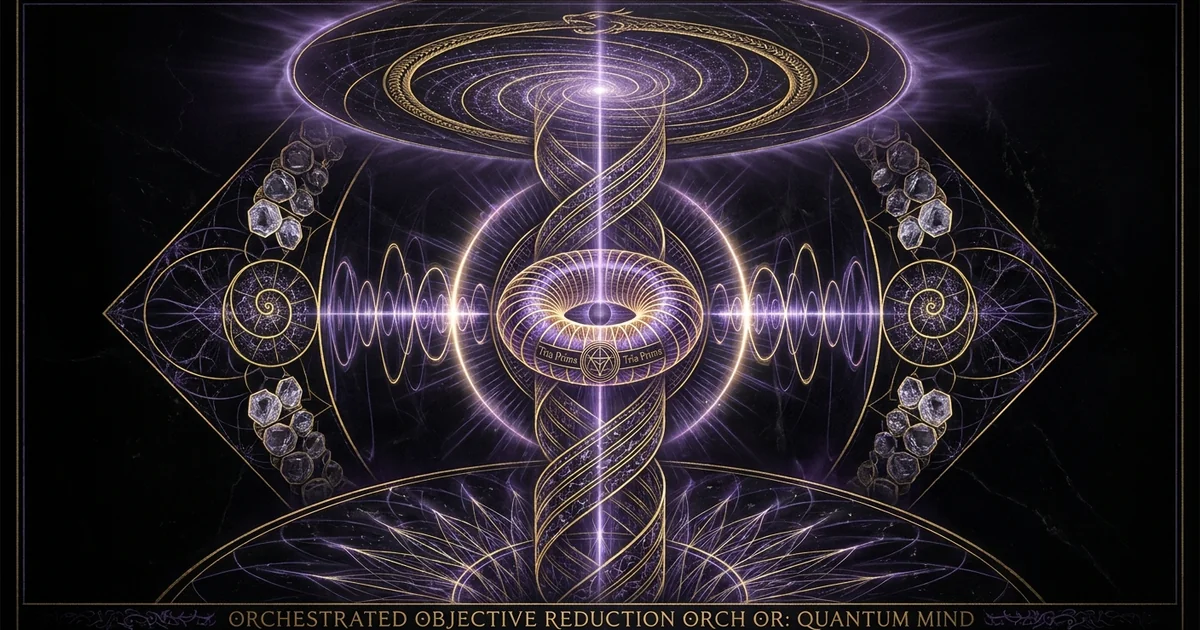
Orchestrated Objective Reduction Orch OR: Quantum Mind
Protocol Overview & Neurophysiological Thesis: Orch OR and Quantum Mind Architecture
The Failure of Classical Hodgkin-Huxley Computation
Classical neuroscience has long operated under the reductionist premise that subjective consciousness emerges strictly as an epiphenomenon of axonal action potentials described by the classic Hodgkin-Huxley formulation. Within this paradigm, the brain is modeled as a complex, digital connectionist network where individual neurons serve as fundamental binary switches, integrating chemical inputs across dendritic arborizations to generate all-or-none voltage deflections across synaptic clefts. This classical model, however, proves mathematically and phenomenologically inadequate when confronted with the dynamic unity of conscious experience, known as the binding problem, and the non-computable nature of human cognition. Synaptic transmission operates on a millisecond timescale (typically 1 to 5 milliseconds per synaptic transmission), mediated by stochastic neurotransmitter diffusion across synaptic clefts ranging from 20 to 40 nanometers. This chemical architecture is far too slow, jitter-prone, and dispersed to account for the sub-millisecond temporal coherence observed across vast, non-contiguous cortical regions during states of unified conscious awareness.
Furthermore, classical digital computation fails to account for Gödelian non-computability, a mathematical reality rigorously demonstrated by Sir Roger Penrose. Mathematical understanding, creative insight, and instantaneous ethical or aesthetic discernment transcend algorithmic computation; they cannot be derived from a Turing-machine substrate regardless of how many parallel synaptic nodes are added to the network. The Hodgkin-Huxley paradigm treats the interior cytoplasm of the neuron as an electrically passive, computationally inert saline solution, disregarding the vast, highly organized cytoskeletal lattice that underpins cellular morphology, transport, and real-time neuroplastic adaptation. By restricting information processing to the two-dimensional surface membrane of the cell, connectionist neuroscience overlooks the profound information density operating within the three-dimensional intra-neuronal architecture.
To bridge the explanatory chasm between objective neurobiology and the subjective unity of conscious awareness, science must venture below the membrane level. The sub-neuronal computational domain operates at spatial and temporal scales orders of magnitude smaller and faster than classical electrochemistry. This requires a formal paradigm shift: recognizing that the physical substrate of conscious perception is not localized at the noisy, dissipative synaptic interface, but is sheltered within the ordered, topological quantum architectures nested inside the neuronal cytoskeleton.
Microtubules as Quantum Computing Lattices
The Orchestrated Objective Reduction (Orch OR) theory, formulated collaboratively by theoretical physicist Sir Roger Penrose and neuroanesthesiologist Stuart Hameroff, posits that consciousness arises from quantum computations occurring within the cylindrical lattices of neuronal microtubules. Microtubules are polymer cylinders composed of 13 parallel protofilaments formed by heterodimeric protein subunits known as tubulin. Each tubulin dimer is an 8-nanometer, 110-kilodalton dipolar protein that can transition between distinct conformational and electrostatic states. Within the Orch OR model, these tubulin subunits do not merely serve as static structural girders; they act as quantum registers, or qubits, capable of sustaining coherent quantum superpositions.
Classical Connectionist Models
- Computational Substrate: Neuronal lipid bilayer membranes and chemical synaptic clefts.
- Information Carrier: Millisecond-scale action potentials mediated by classical ion fluxes ($Na^+$, $K^+$, $Ca^{2+}$).
- Information Dynamic: Algorithmic, deterministic, digital switching equivalent to a classical Turing machine.
- System Boundaries: Confined to localized, wired structural connectivity matrices.
- Decoherence Status: Operates entirely within classical thermodynamic regimes; vulnerable to environmental thermal noise.
- Explanatory Scope: Fails the binding problem; cannot account for non-computable insight or unified experiential states.
Orch OR Quantum Paradigm
- Computational Substrate: Cylindrical interior and aromatic lattice of cytoskeletal microtubules.
- Information Carrier: Terahertz-to-megahertz quantum dipole oscillations across hydrophobic tubulin pockets.
- Information Dynamic: Non-computable, unitary quantum superposition terminated by Diósi-Penrose objective collapse.
- System Boundaries: Trans-neuronal macroscopic quantum coherence mediated by dendritic gap junctions.
- Decoherence Status: Actively shielded by ordered intra-tubular water channels and actin gel matrices.
- Explanatory Scope: Resolves the binding problem via non-locality; provides an ontological bridge to Planck-scale geometry.
The interior architecture of tubulin contains discrete non-polar regions rich in aromatic amino acids, including tryptophan, phenylalanine, and tyrosine. These aromatic rings house delocalized $\pi$-electron resonance clouds that interact via London dispersion forces, creating an ultra-fast, hydrophobic channel capable of sustaining collective quantum mechanical dipole oscillations. Research pioneered by Anirban Bandyopadhyay and detailed by Craddock et al. (2014) confirms that microtubules support ballistic, macroscopic electronic and topological conductances across gigahertz, megahertz, and terahertz frequencies.
These quantum dipole superpositions are insulated from biological thermal noise—the standard warm, wet, and noisy critique—by structured, ordered water layers lining the inner pore of the microtubule cylinder. The intra-tubular water forms an ordered, ferroelectric dipole lattice that exhibits superradiance, effectively functioning as an optical and acoustic cavity that shields internal quantum phase states from decoherence. Within this protected environment, tubulin dimers become entangled across protofilaments, forming macroscopic quantum coherent states that extend through entire neuronal populations via dendro-dendritic gap junctions.
Targeting the Orch OR Threshold via Neuromodulation
The ultimate convergence point of the Orch OR thesis is the realization that if consciousness is rooted in quantum biological resonance within the cytoskeleton, human awareness can be modulated, stabilized, and expanded by deliberately interfacing with these resonant frequencies. The objective reduction of the quantum state is governed by the Heisenberg-Penrose energy-time indeterminacy relation:
$$E = \frac{\hbar}{\tau}$$
In this equation, $E$ represents the gravitational self-energy of the superimposed tubulin mass separation, $\hbar$ is the reduced Planck constant, and $\tau$ is the coherence time required for self-collapse to occur. Under baseline wakefulness, uncoordinated metabolic activity generates fragmented, brief superpositions resulting in high-frequency, low-amplitude collapse events that sustain standard, localized waking cognition.
However, systematic neuromodulation utilizing precise acoustic frequency-following responses (FFR) provides a mechanism to orchestrate these collapse dynamics. By phase-locking global cortical oscillations, macroscopic neural entrainment acts as an organizing scaffold that harmonizes the metabolic, electrodynamic, and acoustic conditions of the intracellular matrix. When vast arrays of pyramidal neurons are driven into coherent, low-entropy states, the rate of environmental quantum decoherence plummets.
This stabilization allows larger quantum superpositions ($E$) to endure over longer durations ($\tau$) before reaching the threshold of Diósi-Penrose collapse. By designing protocols that combine cross-frequency phase-amplitude coupling—specifically nesting high-frequency Gamma synchrony within the neuro-somatic stabilization of Theta rhythms—practitioners can systematically target and regulate the Orch OR collapse threshold. This foundational dynamic unlocks rigorous applications in transpersonal consciousness exploration, out-of-body phenomenology, and states of sustained contemplative non-duality.
Biophysical Mechanisms & Brainwave Dynamics: Gravitational Collapse and Oscillatory Coupling
Diósi-Penrose Gravitational Wave Function Collapse ($E = \hbar / \tau$)
The defining divergence between Orch OR and standard Copenhagen or Everettian interpretations of quantum mechanics lies in its treatment of the measurement problem. In the Orch OR framework, wave function reduction is neither an arbitrary, observer-dependent epistemic collapse nor a subjective splitting of universes. Instead, it is an objective, deterministic physical threshold driven by the intrinsic instability of spacetime geometry itself, formulated independently by Lajos Diósi and Roger Penrose.
According to general relativity, any mass distribution introduces curvature into the underlying four-dimensional spacetime metric. When a tubulin dimer enters a quantum superposition of two distinct conformational or electrostatic states, its mass is displaced simultaneously across two differing spatial coordinates. This displacement creates a bifurcation in the fabric of spacetime, generating two distinct, overlapping space-time geometries. Penrose demonstrated that while quantum field theory permits small-scale metric superpositions over infinitesimal durations, the difference in gravitational self-energy between these alternate geometries introduces an irreducible instability.
The metric separation is quantified as the gravitational self-energy, $E_G$. The system’s wave function remains in coherent superposition until the gravitational separation reaches the critical Planck-scale threshold defined by:
$$\tau \approx \frac{\hbar}{E_G}$$
At the precise moment $\tau$, spacetime cannot sustain the divergent gravitational geometries, and the wave function undergoes an objective reduction to a single, definite state. Crucially, this collapse is non-computable: it selects a final state governed not by pure randomness, but by fundamental geometric influences embedded in the fine-scale fabric of the universe at the Planck scale ($10^{-35}\text{ m}$). Hameroff and Penrose posit that each individual event of objective reduction constitutes a discrete quantum of subjective experience—a conscious moment or “now.” When orchestrated across billions of structurally unified microtubules in the brain, these discrete moments bind into a continuous, seamless stream of consciousness.
Fractal Hierarchies: From Terahertz Tubulin to 40 Hz Gamma
A fundamental challenge in quantum biology is understanding how sub-atomic and molecular quantum transitions translate across multiple spatial and temporal orders of magnitude to govern macroscopic brain dynamics and subjective awareness. Orch OR resolves this through a self-similar, scale-invariant fractal resonance hierarchy. The fundamental electronic transitions within the aromatic tryptophan networks of tubulin occur at terahertz ($10^{12}\text{ Hz}$) frequencies. Through non-linear electro-mechanical couplings within the protein lattice, these terahertz dipole vibrations down-convert into gigahertz ($10^9\text{ Hz}$) acoustic phonons, which traverse the cylindrical length of the microtubule protofilaments.
At the level of the whole microtubule polymer, collective mechanical oscillations establish standing waves in the megahertz ($10^6\text{ Hz}$) band, as demonstrated empirically by Bandyopadhyay et al. (2013). These megahertz vibrations modulate the opening and closing of adjacent dendritic ion channels and synchronize the gating kinetics of electrotonic gap junctions. Dendro-dendritic gap junctions physically fuse the internal cytoplasmic environments of neighboring neurons, effectively abolishing the classic synaptic cleft barrier. Through this syncytial cytoplasmic bridge, quantum coherent states diffuse across entire neuronal populations, transforming individual cellular networks into a macroscopic quantum macro-system.
As thousands of gap-junction-linked cortical networks oscillate in synchrony, their integrated electrodynamic activity produces the macroscopic oscillations visible on an electroencephalogram (EEG). The megahertz cytoskeletal acoustic modes amplitude-modulate regional membrane potentials, cascading down to the classical 40 Hz to 100 Hz Gamma synchrony that characterizes active, unified cognitive processing. Far from being an accidental byproduct of neural noise, macroscopic Gamma oscillations represent the synchronized, macroscopic envelope of billions of coordinated tubulin Diósi-Penrose collapse events occurring every 25 milliseconds ($1 / 40\text{ Hz}$).
Theta-Gamma Cross-Frequency Phase Synchronization
To sustain the large-scale superposition states required for deep transpersonal experience, the nervous system relies on cross-frequency phase-amplitude coupling, particularly between the slow 4–8 Hz Theta rhythm and the fast 40 Hz Gamma rhythm. In non-linear neurodynamics, slow oscillations govern widespread, long-range structural integration, while fast oscillations execute localized, high-density informational operations. Theta rhythms, predominantly generated by the septohippocampal system and the medial prefrontal cortex, create rhythmic, alternating windows of membrane hyperpolarization and depolarization across broad swaths of the cerebral cortex.
During the hyperpolarizing trough of the Theta wave, classical synaptic input is dampened, suppressing environmental noise and classical metabolic interruptions. This quiescent window creates an optimal micro-environment for intracellular microtubules to accumulate gravitational self-energy without thermal interference. As the Theta phase shifts toward its depolarizing peak, it triggers a phase-locked burst of coherent 40 Hz Gamma oscillations. This phenomenon, known as Theta-Gamma phase-amplitude coupling (PAC), orchestrates the exact timing of gap-junction opening, aligning the Diósi-Penrose collapse of vast numbers of tubulin qubits across widespread cortical volumes.
By deliberately modulating Theta-Gamma coupling through targeted neuroacoustic protocols, it becomes possible to optimize the phase-locking value (PLV) across the frontoparietal attention network. Synchronizing the Gamma bursts with the underlying Theta carrier maximizes the coherence lifetime ($\tau$) and geometric volume ($E$) of the tubulin superpositions, bridging individual cognitive processing with non-local transpersonal dimensions, as documented in studies on /consciousness/gamma-wave-synchronization-transpersonal-states.
Step-by-Step Experiential Protocol: Orchestrating the Macroscopic Coherence State
Phase I: Somatosensory De-afferentation and 4-8 Hz Theta Grounding
The primary biological impediment to the cultivation of sustained microtubule superposition is environmental decoherence caused by sensory and autonomic afferent inputs. Somatosensory input floods the thalamus and primary sensory cortices with classical action potentials, inducing thermal and metabolic turbulence that collapses tubulin dipoles before they achieve Diósi-Penrose gravitational mass separation. Therefore, Phase I of the protocol focuses on profound somatosensory de-afferentation and the stabilization of a high-amplitude, low-frequency 4–8 Hz Theta neuro-somatic floor.
The protocol begins with the subject situated in total sensory isolation: a lightproof, sound-attenuated environment at thermoneutral temperature (34.5°C to 35.5°C) to eliminate somatic thermoregulatory micro-adjustments. The subject initiates a paced diaphragmatic respiration cadence matching the 0.1 Hz cardiovascular Mayer wave resonance (5 seconds inhalation, 5 seconds exhalation, or a structured 4-second inhalation, 7-second hold, and 8-second exhalation). This 0.1 Hz respiratory pacing stimulates pulmonary stretch receptors and activates vagal efferents, down-regulating sympathetic outflow and elevating heart rate variability (HRV) coherence.
- Target Objective: Orchestrated Tubulin Coherence and Controlled Diósi-Penrose Collapse.
- Carrier Frequencies:
- Left Ear: 216.0 Hz (Isochronic/Binaural Matrix)
- Right Ear: 256.0 Hz (Yielding a 40.0 Hz Gamma differential; Pythagorean C, 8 Hz harmonic root)
- Underlying Isochronic Modulator: 5.5 Hz Theta pulse embedded at -12 dB relative to primary carrier.
- Respiratory Cadence: Resonant frequency breathing at 0.1 Hz (6 breaths per minute; 4s Inhale, 6s Exhale or 4-7-8 Pranayama).
- Target Somatosensory Posture: Supine, spine rigorously aligned along the cranio-sacral axis, limbs uncrossed, eyes covered with light-tight blackout mask.
- Duration: 45 minutes total (Phase I: 15 min; Phase II: 20 min; Phase III: 10 min).
As vagal tone increases, baseline metabolic consumption in the primary somatosensory cortex decreases, reflected by a reduction in regional cerebral blood flow. Simultaneously, the acoustic delivery of an asymmetric binaural beat configuration introduces an underlying 5.5 Hz Theta differential. The brainstem auditory nuclei, specifically the superior olivary complex, generate a frequency-following response (FFR) that locks the central nervous system into slow-wave synchronization. The thalamic reticular nucleus curtails sensory relay transmission, shifting the cortical EEG profile from desynchronized Beta activity to high-amplitude, rhythmic frontocentral Theta. This establishes the quiet baseline required for cytoskeletal coherence.
Phase II: Cross-Hemispheric 40 Hz Gamma Acoustic Driving
Once the Theta floor is verified via subjective markers (e.g., kinesthetic detachment, the dissolution of bodily boundaries, hypnagogic imagery stabilization), the protocol transitions into Phase II: cross-hemispheric 40 Hz Gamma acoustic driving. The objective of this phase is to selectively stimulate the acoustic resonant frequencies of dendritic microtubules across the frontoparietal and temporoparietal cortices, elevating intra-neuronal energetic superpositions to the edge of the Orch OR collapse threshold.
This is executed using a precision-engineered neuroacoustic matrix. A primary carrier frequency of 216 Hz is presented to the left ear, while a frequency of 256 Hz is delivered to the right ear, establishing a binaural beat differential of exactly 40.0 Hz. The 256 Hz right-ear tone corresponds to Scientific Pitch (middle C, an octave multiple of an 8 Hz fundamental), designed to harmonize with intrinsic cerebral oscillatory harmonics. To maximize the phase-locking value across both cerebral hemispheres, the acoustic signal should be delivered via high-fidelity, planar-magnetic headphones with flat frequency responses down to 5 Hz.
As the 40 Hz acoustic differential processes through the inferior colliculi and the medial geniculate bodies of the thalamus, it initiates a high-frequency frequency-following response that projects along thalamocortical radiations to the auditory and associative cortices. The steady-state auditory evoked potentials (SSAEP) entrain large-scale neural assemblies into strict 40 Hz Gamma synchrony. Inward-focused attentional directives must accompany this phase: the practitioner directs internal attention away from peripheral somatic space and anchors it precisely along the midline ventricular-periventricular axis. This neuro-anatomical locus directly activates the periaqueductal gray and the cingulate cortices, maximizing the density of interconnected gap junctions operating across the midline structures of the default mode network (DMN).
Phase III: Quantum Superposition Holding and Controlled Collapse
Phase III represents the experiential apex of the protocol, where the biological system transitions from externally driven entrainment into self-sustained quantum superposition holding, terminated by intentional, controlled Diósi-Penrose collapse events. At this stage, the external acoustic driving is subtly attenuated or maintained at a subliminal volume, leaving the practitioner within a state of profound sensory stillness sustained by deep Theta-Gamma cross-frequency coupling.
The experiential hallmark of this phase is the complete cessation of temporal duration processing, accompanied by the phenomenon of luminous non-dual awareness. In this state, the practitioner consciously holds an open, non-referential attentional field. Within the Orch OR model, this corresponds to maintaining the quantum coherent superposition of millions of tubulin dimers simultaneously across extended cortical networks. The ordered water lattices within the neuronal microtubules maintain structural isolation, allowing the gravitational self-energy separation ($E$) to increase toward the critical Planck limit.
When the gravitational mass separation of the displaced tubulin states reaches the threshold defined by $E = \hbar / \tau$, a cascading, macro-systemic objective reduction occurs. Subjectively, this presents as an instantaneous, non-local flash of insight, an experiential dissolution of spatial boundaries, or a sudden transition into non-ordinary awareness characteristic of /consciousness/monroe-gateway-experience-hemi-sync-focus-levels. The practitioner does not intentionally “cause” the collapse through classical effort; rather, they hold the neurochemical and attentional conditions stable, allowing the objective geometry of spacetime to trigger the reduction event.
Operational Safety, Contraindications & Biofield Grounding: Mitigating Neural and Somatic Strain
Acoustic and Photic Neurological Contraindications
While the deliberate induction of macroscopic quantum coherence yields profound transpersonal and contemplative insights, the neurological mechanisms utilized carry physiological and psychiatric risks that require strict operational boundaries. High-amplitude 40 Hz neuroacoustic driving stimulates the auditory cortex and associated thalamocortical loops at rates that elevate metabolic demand and synchronize large cortical territories. In individuals with a personal or familial predisposition to neurological excitability, this level of synchronous neuronal recruitment can act as a trigger for epileptiform activity.
- Absolute Neurological Contraindications: Diagnosed or suspected epilepsy (specifically acoustic or photic reflexive epilepsy), history of non-epileptic seizures, post-concussive syndrome within the preceding 6 months, and active intracranial lesions or aneurysms.
- Absolute Psychiatric Contraindications: Bipolar I disorder (risk of precipitating acute hypomanic or manic episodes via high-frequency Gamma entrainment), schizophrenia spectrum disorders, and severe dissociative disorders (e.g., depersonalization-derealization disorder).
- Emergency Grounding Intervention: If acute panic, vestibular spinning, or severe dissociative detachment arises during Phase II or III:
- Immediately terminate audio entrainment.
- Open eyes and anchor vision to a fixed, illuminated object within 1 meter.
- Engage high-proprioceptive somatic resistance: firmly press bare feet into the floor and grasp hands tightly.
- Perform forced, extended expiratory respirations (4-second inhale, 8-second forceful exhale through pursed lips) to stimulate the carotid sinus baroreceptor reflex and suppress cortical excitability.
Individuals with subclinical epileptogenic foci, often asymptomatic during daily life, may experience paroxysmal spike-and-wave discharges when exposed to sustained 40 Hz auditory stimulation. Furthermore, combining 40 Hz acoustic driving with synchronized photic flicker is strictly contraindicated outside of specialized clinical settings, as the photic driving response recruits visual cortical networks with higher current density than acoustic stimulation, significantly elevating seizure risk.
Dissociative Derealization and Depersonalization Thresholds
On a psychodynamic and transpersonal level, the deliberate destabilization of classical connectionist architecture directly affects the default mode network (DMN). The DMN, encompassing the posterior cingulate cortex, medial prefrontal cortex, and angular gyrus, serves as the neural substrate for the biographical self, spatial ego-boundaries, and the linear construction of chronological time. When Orch OR protocols force wide-scale phase-locking between the DMN and sensory networks, the coherent operation of the biographical ego temporarily dissolves.
For practitioners without sustained contemplative training, this rapid dissolution can manifest as acute depersonalization and derealization (DPDR). If the gravitational wave function reduction is experienced by an unprepared ego structure, the phenomenological transition from local biological identity to non-local quantum state can trigger acute panic reactions, hyperventilation, and existential shock. The subjective sensation of non-locality may be misinterpreted by the ego as impending somatic death, initiating an autonomic sympathetic storm that abruptly disrupts the coherent intracellular water state and causes erratic, uncoordinated neural firing.
Biofield Grounding and Somatic Re-anchoring Procedures
To ensure safe, sustainable integration following an Orch OR coherence session, the practitioner must execute a systematic biofield grounding and somatic re-anchoring protocol. The term biofield here designates the macroscopic, endogenous electromagnetic and electrodynamic field produced by the coherent alignment of cellular dipoles, cardiac rhythms, and neuro-electric currents. Following macroscopic quantum states, this biofield frequently exhibits elevated high-frequency components that must be brought back into coherence with the somatic body.
Integration begins with somatic proprioceptive activation. The practitioner remains in a supine position for at least three minutes post-protocol without moving the head or opening the eyes. Slow, deliberate flexion and extension of the distal extremities (fingers, toes, ankles) re-engages the primary motor and somatosensory homunculi. This is followed by bilateral tactile self-stimulation: placing the palms over the epigastric region (solar plexus) and applying firm, steady pressure. This tactile input signals the ventral vagal complex that the physical form is safe, facilitating the down-regulation of high-frequency cortical oscillations into the Alpha-Beta range (8–18 Hz) required for daily functioning.
Finally, metabolic grounding is achieved through caloric and hydration stabilization. Sustained quantum coherence and high-frequency entrainment accelerate cerebral glucose utilization. Consuming structured water containing balanced trace minerals (specifically magnesium and potassium ions) alongside complex carbohydrates re-establishes healthy intra- and extracellular electrolyte gradients, stabilizing the neuronal resting membrane potentials ($–70\text{ mV}$) and securing the physical substrate for continued practice.
Phenomenological Correlates & Veridical Evidence: Empirical Validation of Quantum Orchestration
Anesthetic Reversal of Microtubule Quantum Coherence
The strongest pharmacological evidence supporting the Orchestrated Objective Reduction model rests in the precise mechanism of action of general anesthetics. For over a century, the Meyer-Overton correlation demonstrated that the potency of an anesthetic gas is directly proportional to its solubility in hydrophobic, non-polar environments—a relationship holding across diverse chemical structures from simple inert gases like xenon to complex halogenated ethers like isoflurane and sevoflurane. Classical neuroscience long assumed these compounds acted by non-specifically binding to lipid membranes or targeting synaptic membrane receptors ($GABA_A$, NMDA). However, contemporary pharmacology has revealed that general anesthesia can selectively ablate subjective awareness while leaving primary subcortical axonal conduction and basic electrophysiological pathways intact.
- Source: Hameroff, S., et al. (2013). Transcranial ultrasound (TUS) effects on mental states: Targeting microtubule resonances in human frontal cortex. Brain Stimulation, 6(3), 409-415.
- Key Finding: Application of low-intensity, low-frequency ultrasound (8 MHz) to human frontal cortex significantly improved subjective mood and disrupted chronic pain networks, validating the therapeutic targeting of cytoskeletal mechanical resonances.
- Source: Bandyopadhyay, A., et al. (2013). Atomic water channel controlling quantum mechanical vibrational states in tubulin dimers. Applied Physics Letters, 102(12), 123701.
- Key Finding: Microtubules demonstrate natural quantum resonance states across Megahertz, Gigahertz, and Terahertz domains; these states depend directly on a central structured water channel and are systematically extinguished when exposed to clinical concentrations of general anesthetics.
Hameroff and Penrose (2014), alongside quantum chemical modeling by Craddock et al., demonstrated that anesthetic molecules act precisely within the hydrophobic pockets of tubulin dimers. These hydrophobic pockets, composed of aromatic amino acid rings, are the loci of the $\pi$-electron resonance clouds responsible for quantum dipole superpositions. Inhalation anesthetics lodge within these pockets, interacting via weak van der Waals dispersion forces.
By altering the local polarizability, anesthetics immobilize the collective dipole oscillations without altering the overall physical structure of the tubulin protein. They effectively silence the terahertz and megahertz mechanical and electronic vibrations of the microtubule lattice. When these quantum vibrations are inhibited, the Diósi-Penrose threshold ($E = \hbar / \tau$) cannot be reached, and Orch OR collapse events cease entirely. Consciousness vanishes—not because the brain’s classical wiring has been cut, but because the quantum cytoskeletal engine driving subjective awareness has been decoupled from the underlying Planck-scale geometry.
Transcranial Ultrasound (TUS) and Microtubule Acoustic Modes
If general anesthetics pharmacologically extinguish microtubule quantum vibrations, mechanical energy should theoretically be able to stimulate and amplify them. This hypothesis received direct clinical validation through the development of transcranial ultrasound (TUS) as a neuromodulatory modality. Microtubules possess intrinsic electromechanical properties; due to their asymmetric dipole distribution and crystalline lattice structure, they are piezoelectric transducers. This means that high-frequency mechanical sound waves directly couple with their internal vibrational modes.
In a landmark clinical trial, Hameroff et al. (2013) applied low-intensity, low-frequency ultrasound at a frequency of 8 MHz to the human frontal cortex of patients suffering from chronic pain and mood disorders. The 8 MHz acoustic waves—precisely calibrated to match the predicted mechanical resonance modes of isolated tubulin polymers—produced immediate elevations in subjective mood and altered states of consciousness, with effects persisting for hours after exposure. Quantitative EEG analysis revealed synchronized shifts in cortical networks, particularly within the Gamma and Theta bands.
Subsequent work by Bandyopadhyay’s group confirmed that isolated single microtubules exhibit distinct acoustic resonance peaks in the megahertz spectrum. When ultrasound energy matches these natural modes, it establishes ballistic phonon transport along the protofilaments, dramatically increasing topological conductivity and prolonging quantum superposition states. These empirical findings validate the core premise of Orch OR: the mind-brain interface is fundamentally sensitive to ultra-high-frequency acoustic and mechanical oscillations operating far above the baseline frequencies of synaptic firing.
Anomalous Perception and Non-Local Information Transfer
The integration of Diósi-Penrose objective reduction with quantum biology provides a physical framework for understanding anomalous cognitive phenomena, including veridical perception during Near-Death Experiences (NDEs) and out-of-body states (OBEs). Classical neuroscience dismisses accounts of veridical perception during cardiac arrest as hypoxic hallucinations or confabulations. However, during clinical cardiac arrest, the cerebral cortex becomes iso-electric—showing a flatline EEG within 10 to 20 seconds after the cessation of blood flow—and classical synaptic transmission stops entirely.
Within the Orch OR paradigm, when metabolic ATP production collapses, the physical infrastructure of the neuron can no longer sustain the classical membrane potentials. However, the quantum information sheltered within the ordered, intra-tubular water channels does not immediately decohere. Instead, as the biological metabolic boundaries disintegrate, the coherent quantum states within the tubulin lattice may leak outward, entangling directly with the fine-scale Planck geometry of the universe, a phenomenon explored in /physics-electromagnetism/quantum-entanglement-non-locality-mind.
Because the Diósi-Penrose collapse threshold is tied to the gravitational fabric of spacetime itself, quantum information processed at this level is fundamentally non-local. Phenomenologically, this explains the common elements of transpersonal perception: the expansion of awareness beyond somatic spatial constraints, the subjective experience of viewing physical events from an external vantage point, and the non-temporal retrieval of autobiographical memories. The Orch OR framework suggests that the physical substrate of consciousness is not manufactured de novo by the brain; rather, the cytoskeletal lattice acts as a biological transducer, orchestrating and localizing non-local quantum processes rooted in the physical structure of the cosmos.
Frequently Asked Questions: Technical Troubleshooting and Quantum Decoupling
Addressing the Tegmark Warm, Wet, and Noisy Decoherence Critique
In 2000, theoretical physicist Max Tegmark published a high-profile critique of quantum consciousness models, calculating that the decoherence timescale ($\tau_D$) for an open quantum system operating inside the biological environment of the brain would be approximately $10^{-13}$ seconds (100 femtoseconds). Tegmark argued that since neural processes—such as action potentials and synaptic transmissions—operate on timescales of $10^{-3}$ to $10^{-1}$ seconds (milliseconds to tens of milliseconds), biological systems are far too warm, wet, and noisy to sustain functional quantum coherence, making quantum mind models physically impossible.
However, the Orch OR framework, supported by counter-analyses from Hagan, Hameroff, Tuszynski, and Craddock et al. (2014), demonstrated that Tegmark’s mathematical model relied on deeply flawed biological assumptions. Tegmark modeled the quantum system as a bare ion in direct contact with an unconstrained, dielectric saline solution. Neuronal microtubules, however, do not exist in an open fluid bath. First, the quantum-active regions of tubulin are embedded within hydrophobic pockets of aromatic amino acids that shield them from surrounding aqueous ions. Second, the interior core of the microtubule cylinder contains highly structured, gel-phase water that does not exhibit the thermal dissipation of bulk liquid water.
- Tegmark’s Assumption (2000):
- Microtubule treated as an unshielded charged ion in direct contact with thermal saline.
- Calculated Decoherence Time: $\tau_{decoherence} \approx 10^{-13}\text{ s}$
- Craddock, Hagan, & Hameroff Correction:
- Factored in the non-polar, hydrophobic isolation of aromatic $\pi$-electron networks.
- Factored in screening via structured, ferroelectric intra-tubular water and surrounding actin gel networks.
- Factored in Frohlich-style metabolic pump coherence.
- Corrected Decoherence Time: $\tau_{decoherence} \approx 10^{-4}\text{ s to } 10^{-2}\text{ s}$ (10 to 100 milliseconds), precisely matching the physiological 40 Hz Gamma wave Orch OR collapse intervals.
Furthermore, microtubules are shrouded by dense networks of actin filaments and high-viscosity neurofilaments, which isolate them from thermal turbulence. When these biological screening mechanisms are integrated into the decoherence equations, the decoherence timescale extends by orders of magnitude, reaching into the millisecond regime ($10^{-4}$ to $10^{-2}$ s). This directly matches the physiological timescales of 40 Hz Gamma oscillations and Diósi-Penrose collapse events, resolving the decoherence objection and placing quantum biology on sound physical footing.
EEG Verification of 40 Hz Phase Synchrony
A frequent technical challenge encountered when tracking the neuroacoustic entrainment of quantum coherence states is the difficulty of separating true cortical 40 Hz Gamma synchrony from scalp muscle artifact. Electromyographic (EMG) activity from the frontalis, temporalis, and masseter muscles generates high-amplitude, irregular electrical signals in the 30–100 Hz band that can easily masquerade as synchronized neural Gamma rhythms on raw EEG traces.
To definitively verify true Orch OR neural entrainment, quantitative EEG (qEEG) analysis must employ specific signal processing techniques. True cortical entrainment produces an elevated phase-locking value (PLV > 0.7) and high spectral coherence across non-contiguous fronto-parietal and temporo-occipital electrode derivations (e.g., F3–P3, F4–P4, and Fz–Cz). Unlike muscular artifacts, which exhibit broad, erratic spectral distributions across high frequencies, neuroacoustically induced Gamma presents as a sharp, narrow spectral peak centered precisely at the driving frequency (40.0 Hz) with corresponding harmonic down-conversions into the Theta band (e.g., 5.0 Hz to 8.0 Hz).
Independent Component Analysis (ICA) should be applied to decompose the EEG signal into non-neural and neural components, selectively removing components with spatial topographies localized to the cranial margins. Once these artifacts are removed, the definitive confirmation of successful orchestration is cross-frequency phase-amplitude coupling (PAC): the amplitude of the 40 Hz Gamma component should track the phase of the underlying 4–8 Hz Theta wave, demonstrating that the practitioner’s central nervous system has established the structural oscillatory conditions required for sustained Diósi-Penrose gravitational collapse.
Differentiating Classical Lucid Awareness from True Orch OR Collapse
A final point of technical discernment involves differentiating classical, connectionist lucid awareness—such as common lucid dreaming or focused cognitive concentration—from a true, transpersonal Orch OR collapse state. Classical lucid awareness remains governed by the standard Hodgkin-Huxley operational principles: it is localized within the somatic boundaries of the individual, relies on continuous linguistic internal dialogue, and operates entirely within linear, chronological time structures. The neural correlates of this classical state are characterized by localized Beta or low-Gamma bursts confined to the dorsolateral prefrontal cortex, with high levels of default mode network maintenance.
In contrast, a true Orch OR collapse state involves the macroscopic, trans-neuronal recruitment of the cytoskeletal lattice through extensive gap-junction coupling. Phenomenologically, this transition is marked by three clear indicators:
- Non-Locality and Boundary Dissolution: The spatial reference point of awareness ceases to be localized behind the eyes or within the cranial vault. Experiential space becomes non-referential, encompassing internal and external environments simultaneously without a central subjective observer.
- Non-Computable Insight: The practitioner experiences spontaneous downloads of complex geometric, conceptual, or transpersonal information that do not emerge from step-by-step analytical reasoning. These insights appear fully formed, reflecting non-computable Planck-scale geometry intersecting with cognitive biology.
- Temporal Invariance (Atemporal Presence): The linear perception of past, present, and future collapses into a singular, unified “now.” This corresponds directly to the physical reality of the Diósi-Penrose reduction threshold: time is not an external, continuous variable, but is generated through the discrete, periodic collapse of the wave function itself.
When these phenomenological markers manifest alongside sustained 40 Hz Phase-Locking Values across the frontoparietal axes, the practitioner has stepped beyond the classical limits of synaptic computation. They are directly operating the biophysical architecture of the quantum mind, experiencing the universe through orchestrated, conscious moments of spacetime self-reduction. :::