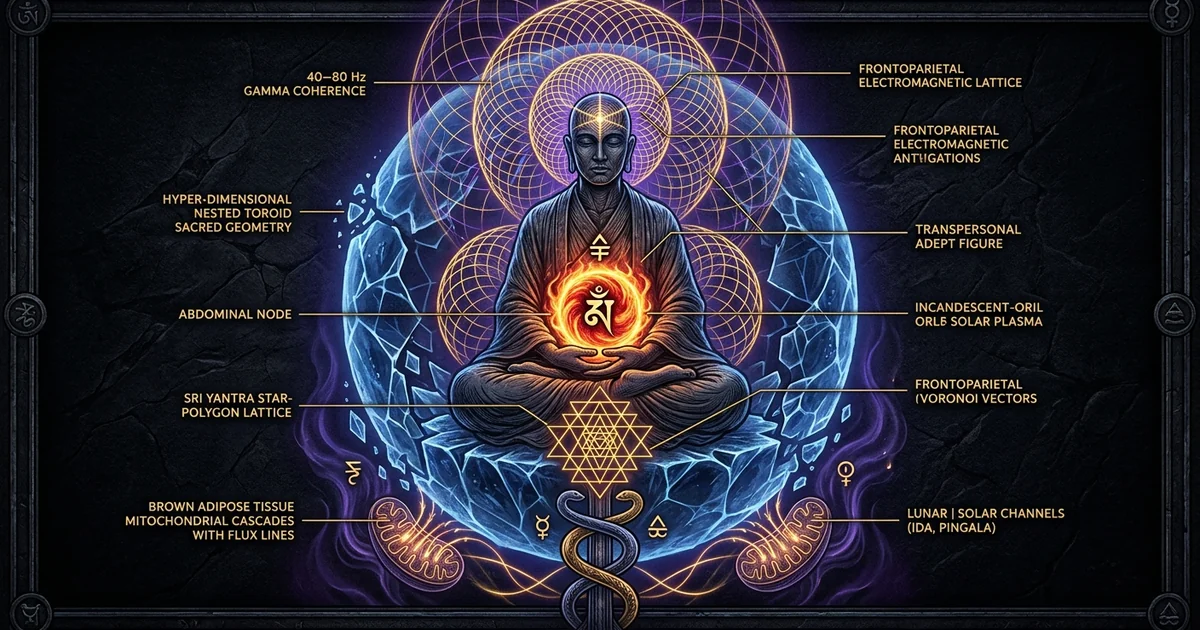
Integrating Cold Exposure with Tibetan Tummo Meditation
1. Protocol Overview & Neurophysiological Thesis
Historical Lineage of Gtum-mo and Modern Cryo-Immersion
The contemplative technology known in the Tibetan Vajrayana tradition as gtum-mo (literally “the fierce, inner-heat woman,” often rendered as Tummo) constitutes the foundational pillar of the Six Dharmas of Naropa (Nāro Chödrug). Developed between the tenth and twelfth centuries within the Kagyu and Mahamudra lineages through the psychophysical transmission of Tilopa, Naropa, Marpa Lotsawa, and the yogi Milarepa, Tummo was formulated not as a mere physiological trick for surviving sub-zero Himalayan altitudes, but as an advanced esoteric vehicle for spiritual liberation. In its classical hermeneutic, ordinary somatic existence is bound by the knotted flow of karmic winds (karmaprāṇa) circulating through the bilateral subtle channels (iḍā and piṅgalā or rkyang-ma and ro-ma). By igniting the latent psychosexual-metabolic furnace seated four finger-widths below the navel within the central channel (avadhūti or dbu-ma), the practitioner dissolves these dualistic constructs, culminating in the experiential realization of Clear Light ('od-gsal) and the non-dual Great Bliss (mahāsukha).
[Karmic Winds: Bilateral Channels] ──> [Ignition at Navel (Caṇḍālī)] ──> [Dissolution into Avadhūti] ──> [Clear Light & Mahāsukha]
Modern environmental physiology and cryotherapy protocols intersect with this contemplative heritage through the deliberate use of acute cold stress. While contemporary cold water immersion ice bath tummo meditation protocols are widely utilized within biohacking and athletic recovery spaces, their modern variants routinely strip the somatic practice of its psycho-energetic framework. This reductive physicalist approach reduces the phenomenon to passive cold acclimatization. However, when cold water immersion is scientifically married to genuine Vajrayana somatic architecture, the resulting synergy yields a psychophysical state that fundamentally transcends ordinary cold adaptation. The practitioner does not merely tolerate thermal trauma through stoic suppression; instead, they utilize the extreme environmental sensory perturbation of ice-water submersion (typically between 0°C and 8°C) as a dynamic catalyst to volitionally recalibrate autonomic nervous system activity, transmuting thermal shock into fuel for deep metabolic and contemplative integration.
“By tightly coiling the lower wind upward and pressing the upper wind firmly down, the two prāṇas are forced to collide at the junction of the central channel beneath the navel. Therein resides the syllable Ah-stroke, thin as a hair, blazing with the crimson radiance of a micro-fine spark. Driven by the bellows of the Vase Breath (bum-pa-can), this subtle flame flares up the avadhūti, melting the white bodhicitta droplet (bindu) positioned at the crown chakra (uṣṇīṣa), which descends in four progressive stages of primordial bliss-emptiness.” — Attributed to Marpa Chökyi Lodrö, The Core Instructions on the Path of Inherent Radiance, 11th Century.
Autonomic Shift: Sympathovagal Balance and Volitional Thermogenesis
Immersion in near-freezing water triggers the mammalian cold shock response: an immediate, overwhelming surge in sympathetic tone characterized by gasping, tachypnea, peripheral vasoconstriction, elevated mean arterial pressure, and profound tachycardia. For the untrained subject, sustained exposure forces the organism into involuntary shivering thermogenesis (ST), wherein somatic motor neurons rhythmically activate antagonistic skeletal muscle groups to generate uncoordinated, energetically costly friction heat. Shivering is metabolically inefficient, depletes glycogen reserves rapidly, induces hyperventilation-induced respiratory alkalosis, and ultimately collapses when core hypothermia sets in.
Integrating the somatic mechanics of Tummo shifts the locus of thermal preservation from involuntary, centrally uncoordinated shivering to volitionally governed non-shivering thermogenesis (NST). This shift is mediated primarily by the autonomic activation of brown adipose tissue (BAT) coupled with central nervous system-mediated vasodilation. The combination of forced diaphragmatic retention (kumbhaka) and dynamic isometric contraction of the pelvic and perineal floors (mūla bandha) triggers a profound reconfiguration of the sympathovagal balance. Rather than succumbing to a standard, sympathetic panic storm, the central nervous system deploys an atypical co-activation: an intense, intentional sympathetic discharge directed at metabolic and adrenergic endpoints, running concurrently with a profound parasympathetic dorsal vagal anchor that suppresses panic, preserves heart rate variability (HRV), and prevents involuntary shivering.
Through this autonomic alchemy, cutaneous blood vessel behavior is dramatically reordered. Instead of prolonged, severe ischemic vasoconstriction that locks peripheral tissue into cyanotic numbness, the Tummo practitioner induces a controlled version of cold-induced vasodilation (CIVD), known historically as Lewis’s hunting reaction. Efferent signals originating from the preoptic area (POA) of the anterior hypothalamus and descending through the rostral ventrolateral medulla (RVLM) instruct alpha-adrenergic receptors to periodically yield. This allows boluses of warmed, oxygenated core blood to perfuse peripheral extremities. The practitioner transforms their somatic envelope from a rigid, freezing shell into a dynamic, metabolically radiating organism that actively metabolizes cold exposure into sustained heat.
Target Consciousness States and Cortical Endophenotypes
The psychological architecture of the Tummo state during cryo-immersion diverges sharply from both mundane cold tolerance and standard mindfulness-based meditation. Neurobiologically, passive mindfulness or open monitoring meditations typically manifest as elevated global Alpha band power (8–12 Hz) or frontomedial Theta (4–7 Hz), correlating with relaxed alertness, decreased sensory gating, and top-down attentional focus. While early entry into the Tummo protocol establishes an underlying substrate of synchronized frontomedial Theta—indicative of profound somatic absorption and working memory recruitment—the application of the bum-pa-can (Vase Breath) retention under thermal stress provokes a striking cortical transformation: high-amplitude, phasic, and tonic Gamma oscillations (40–80 Hz).
These Gamma bursts, which recruit extensive frontoparietal networks, correlate neurocognitively with states of lucid, unified interoception, self-referential dissolution, and hyper-arousal without distress. The practitioner enters an endophenotype characterized by complete top-down modulation of nociception. Sensory afferents from cold pain receptors do not register as suffering or threat; instead, they are integrated within the dorsal anterior cingulate cortex (dACC) and anterior insular cortex (AIC) as raw thermal information.
This state exhibits deep structural parallels to high-order entrainment regimes, such as those documented in advanced audio-somatic protocols and the Focus levels of the Gateway Experience (see further analysis on these consciousness configurations in /meditation/gateway-process-hemi-sync-focus-levels). The Tummo practitioner accesses an identical neuro-phenomenological threshold: the body operates under extreme, survival-level physical parameters, while the observing ego-structure remains dissolved within a transpersonal, diamond-like awareness of non-dual warmth.
2. Biophysical Mechanisms & Neuroendocrine Cascades
Transient Receptor Potential (TRPM8) Ion Channels and Afferent Signalling
The initiation of thermal perception occurs at the molecular interface of the dermis, where specialized cutaneous primary afferent sensory neurons detect cold stress. The principal molecular transducer of moderate-to-severe cold (temperatures below 28°C down to 8°C) is the Transient Receptor Potential Melastatin 8 (TRPM8) ion channel. TRPM8 is a non-selective, homotetrameric, calcium-permeable cation channel located on the terminals of unmyelinated C-fibers and thinly myelinated A-delta fibers. When submerged in an ice bath, the thermodynamic drop drives an allosteric structural rearrangement of the TRPM8 channel, opening its central pore and allowing an influx of extracellular calcium ($Ca^{2+}$) and sodium ($Na^+$) ions into the nerve ending.
Cold Temperature (<28°C) ──> TRPM8 Activation (Ca²⁺/Na⁺ Influx) ──> Action Potentials (C & A-δ Fibers)
                                                                            │
                                                                            ▼
                                                                Dorsal Root Ganglion (DRG)
                                                                            │
                                                                            ▼
                                                              Laminae I & V (Dorsal Horn)
                                                                            │
                                                                            ▼
                                                              Spinothalamic Tract (STT)
                                                                            │
                                                                            ▼
                                                             Lateral Hypothalamus & POA
This rapid depolarization generates high-frequency trains of action potentials that travel centrally via the dorsal root ganglion (DRG) into the superficial laminae (Laminae I and V) of the spinal dorsal horn. From the dorsal horn, the thermal nociceptive signal ascends the lateral spinothalamic tract (STT), projecting directly to the parabrachial nucleus, the thalamic ventroposterior nuclei, and ultimately bifurcating into the primary somatosensory cortex (S1) for spatial-thermal localization and the insular/anterior cingulate networks for affective processing. Concurrently, collateral projections target the median preoptic nucleus (MnPO) and the preoptic area (POA) of the hypothalamus, the master command center for mammalian thermoregulation.
Under normal circumstances, this TRPM8-mediated afferent cascade activates the cold defense circuit: the POA disinhibits the dorsomedial hypothalamic nucleus (DMH) and the rostral medullary raphe (rMR), producing immediate somatic motor output for shivering and massive sympathetic alpha-adrenergic cutaneous vasoconstriction. In the Tummo practitioner, however, this afferent flood is intersected at the cortical and thalamic levels. Top-down cortico-striatal and fronto-insular projections deliver inhibitory control over the POA-rMR pathway, terminating the reflex arc that triggers shivering and shunting autonomic drive into non-shivering thermogenic pathways.
Neuroendocrine Surges: Dopamine, Norepinephrine, and Cortisol Kinetics
The neuroendocrine response to combined cold exposure and Tummo breathwork represents one of the most acute, non-pharmacological catecholamine surges documented in human biology. Extensive endocrinological investigations, particularly those examining cold immersion kinetics (Srba et al., 2000; Kox et al., 2014), demonstrate that profound cold shock coupled with voluntary hyperventilation and breath retention provokes a systemic sympathetic storm characterized by immediate increases in plasma norepinephrine and epinephrine.
Unconditioned Acute Cold Shock
- Cardiovascular Tone: Involuntary tachycardic spiking, uncoordinated sympathetic-vagal co-activation, peripheral vascular resistance surges, pulmonary hyperventilation.
- Autonomic Dominance: Uncontrolled sympathetic panic response combined with high shivering-induced metabolic exhaustion.
- Shivering Thermogenesis: Rapid onset of high-amplitude involuntary shivering (ST), early depletion of glycogen stores, rapid hypothermic drift.
- Catecholamine & Endocrine: Massive cortisol release via HPA-axis distress; unmodulated adrenaline spike; peripheral vasoconstriction leading to tissue ischemia.
- Neurological Correlate: High-frequency Beta panic, hyperactive somatosensory nociception, fragmented ego survival distress.
Tummo-Modulated Cold Immersion
- Cardiovascular Tone: Controlled heart rate modulation; parasympathetic vagal anchoring via sustained diaphragmatic intra-abdominal pressure; transient, deliberate Lewis’s hunting reaction (CIVD).
- Autonomic Dominance: Co-activation of sympathetic metabolic pathways with dorsal/ventral vagal stability; deliberate non-shivering thermogenesis (NST).
- Shivering Thermogenesis: Complete suppression of mechanical shivering; recruitment of mitochondrial uncoupling protein 1 (UCP-1) in Brown Adipose Tissue (BAT).
- Catecholamine & Endocrine: Norepinephrine increases exceeding 500%; sustained baseline dopamine elevation (>250%); blunted or attenuated systemic cortisol response.
- Neurological Correlate: Frontoparietal synchronization; high-amplitude Gamma oscillations (40–80 Hz); interoceptive re-framing of thermal stress as internal heat.
In Tummo-modulated immersion, plasma norepinephrine concentrations surge by over 500% relative to baseline, while circulating dopamine rises by up to 250%, sustained over prolonged periods without the precipitous post-stress crash observed in mundane stressors. Norepinephrine binds to post-synaptic beta-3 adrenergic receptors situated on the cell membranes of brown adipocytes. This binding activates adenylate cyclase, driving intracellular cyclic adenosine monophosphate (cAMP) production, which stimulates protein kinase A (PKA). PKA subsequently phosphorylates hormone-sensitive lipase (HSL), hydrolyzing stored intracellular triglycerides into free fatty acids.
These free fatty acids serve two simultaneous functions: they directly bind to and allosterically activate mitochondrial Uncoupling Protein 1 (UCP-1, or thermogenin) embedded in the inner mitochondrial membrane of brown fat, and they enter the beta-oxidation cycle to generate acetyl-CoA. UCP-1 short-circuits the classical electron transport chain: instead of proton ($H^+$) gradients driving the synthesis of adenosine triphosphate (ATP) through ATP synthase, UCP-1 dissipates the electrochemical proton gradient across the inner mitochondrial membrane entirely as heat. Through this process, BAT converts biological energy into raw caloric heat, warming the blood traveling through adjacent deep thoracic and cervical vascular beds.
Crucially, because the Tummo practitioner remains anchored in non-dual somatic equilibrium, the hypothalamic-pituitary-adrenal (HPA) axis does not exhibit the unmitigated, hyper-cortisolemic panic profile characteristic of psychological distress. Cortisol release is kept proportional and controlled, avoiding catabolic breakdown and immunosuppressive toxicity while maximizing the neuroprotective and vigilance-enhancing qualities of the dopamine-norepinephrine cascade. The biochemical cascades undergirding these states intersect intimately with deeper neuro-energetic dynamics, which are unpacked in /meditation/pranayama-breathwork-neurobiology.
Norepinephrine ──> β3-Adrenergic Receptors ──> Adenylate Cyclase ──> cAMP Surge ──> PKA Activation
                                                                                         │
                                                                                         ▼
Mitochondrial Heat Generation <── Free Fatty Acids <── HSL Phosphorylation (Lipolysis) ◄┘
              │
              ▼
   UCP-1 (Thermogenin) Dissipates Proton Gradient as Pure Caloric Energy
Vascular Dynamics: Transmuting Vasoconstriction into Paradoxical Vasodilation
The primary physiological defense against cold-induced death is cutaneous vasoconstriction, executed by sympathetic postganglionic adrenergic nerves releasing norepinephrine onto vascular smooth muscle $\alpha_1$ and $\alpha_2$ adrenergic receptors. The subsequent intracellular calcium release produces sustained mechanical constriction of pre-capillary arterioles and superficial venules, shunting blood toward the core while reducing thermal dissipation across the body’s surface boundary.
While protective in wilderness survival, sustained cutaneous vasoconstriction eventually leads to localized tissue hypoxia, severe ischemic pain, and loss of fine motor control. The master Tummo practitioner commands an extraordinary vascular reversal: transitioning from involuntary vasoconstriction to intentional, paradoxically sustained vasodilation.
This transformation relies upon two coordinated neurovascular mechanisms:
- Lewis’s Hunting Reaction (CIVD): Modulated by central sympathetic release, where periods of vasoconstriction alternate with waves of cutaneous vasodilation as precapillary sphincters relax.
- Nitric Oxide (NO) Signaling: Triggered by hyperventilation-induced changes in shear stress and central cholinergic-sympathetic vasodilator nerve activation.
During the breath-retention (kumbhaka) phase of Tummo, diaphragmatic downward pressure and transient intra-thoracic pressure elevations provoke fluctuations in arterial blood pressure that engage high-pressure arterial baroreceptors. The practitioner’s intense, interoceptive visualization of fire traversing the peripheral microvasculature stimulates central hypothalamic circuits that suppress baseline sympathetic vasoconstrictive outflow to specific cutaneous angiosomes.
Smooth muscle relaxation allows warmed core blood to pulse through deep muscular beds and subdermal plexuses. The subjective result is the classic Tummo sensation: a sudden, radiant “flash” of heat that begins within the retroperitoneal and abdominal space and rushes outward through the capillaries of the torso, palms, soles, and face, directly counteracting the freezing environmental boundary.
3. Electrophysiological and Cortical Dynamics
EEG Band Modulation: Theta-Alpha Desynchronization to Phasic Gamma
Quantitative electroencephalography (qEEG) recordings of advanced Tummo practitioners reveal dramatic neuroelectric shifts during the transition from baseline resting states into active bum-pa-can breath retention under cold stress. At rest, baseline cortical activity is characterized by high occipital Alpha (8–12 Hz) and sporadic parietal Theta (4–7 Hz). However, upon initiating the hyperventilation-kumbhaka cycle, an immediate desynchronization of the Alpha rhythm occurs across the sensorimotor and visual cortices.
“During the forceful Kumbhaka breath retention coupled with somatic visualization, long-term practitioners of the Tibetan Buddhist g-Tum-mo tradition demonstrated significant increases in axillary and peripheral finger temperatures, rising by as much as 8.3°C. Thermographic analysis confirmed that these increases were not mere artifacts of metabolic shivering, but represented localized, regulated thermogenic shifts driven by deep sympathetic activation of non-shivering brown adipose tissue combined with frontoparietal neurocognitive recruitment.” — Summarized from Benson et al. (1982), Nature, and Kozhevnikov et al. (2013), PLoS ONE.
Following this initial desynchronization, the electrophysiological landscape transforms into high-amplitude, phasic, and tonic Gamma oscillations, occupying the 40–80 Hz frequency range, with local field potentials occasionally peaking near 100 Hz. This Gamma synchronization does not represent epileptic or dysfunctional hyper-arousal; rather, it exhibits strong phase-amplitude coupling (PAC), wherein the phase of slower frontomedial Theta rhythms modulates the amplitude of high-frequency Gamma bursts.
Frontomedial Theta (4–7 Hz Phase) ──> Gates / Entrains ──> Phasic Gamma (40–80 Hz Bursts)
                                                                     │
                                                                     ▼
                      High-Order Cortico-Cortical Information Binding & Non-Dual Awareness
This Theta-Gamma cross-frequency coupling reflects an exceptional density of information processing and inter-regional cortical communication. The frontoparietal network binds the intense somatosensory afferent inputs (extreme cold, visceral pressure from breath retention, intense isometric contraction) into a single, cohesive, non-dual conscious experience. The brain ceases to process the cold as an external assault against an isolated subject; instead, high-frequency synchronization provides the neural substrate for complete experiential transmutation, wherein the sensory signal of freezing is synthesized as raw metabolic luminosity.
Frontoparietal Network Recruitment and Interoceptive Insular Control
Functional neuroimaging studies of conscious thermal regulation—such as the landmark investigations into autonomic willful regulation by Muzik et al. (2018)—highlight specific recruitments within the human connectome that override primitive brainstem reflexes. In the Tummo-stabilized brain, functional connectivity increases between the dorsolateral prefrontal cortex (dlPFC), the posterior parietal cortex (PPC), the dorsal anterior cingulate cortex (dACC), and the anterior insular cortex (AIC).
The anterior insula serves as the master interoceptive integration hub of the primate brain, mapping the physiological status of the internal organs, vascular beds, and cutaneous boundaries. Normally, cold-induced activation of the posterior insula projects directly to the anterior insula to generate the painful subjective feeling of freezing, prompting behavioral escape mechanisms. In the trained contemplative:
- The dlPFC and dACC assert powerful top-down executive modulation over the anterior insula.
- The insula modifies the affective valuation of nociceptive signals via descending projections to the periaqueductal gray (PAG).
- The PAG operates as a central gating switch for endogenous opiate and cannabinoid release, systematically attenuating nociceptive ascent at the dorsal horn of the spinal cord.
Through this frontoparietal-insular axis, the practitioner deploys dynamic mental constructs to actively rewrite somatic sensory meaning. Thermal distress is translated into internal energetic friction. The mind decouples the physical detection of cold from the psychological aversion to pain, leaving an open sensory canvas upon which the visualization of the internal flame (caṇḍālī) can exert direct autonomic instruction.
The Classical ‘Wet Sheet Drying’ Verification and Laboratory Thermography
The ultimate historical benchmark of mastery in the Tibetan Kagyu and Nyingma traditions was the winter ritual known as the “drying of the wet sheets” (chira). Candidates for yogic graduation were positioned outdoors on freezing Himalayan nights, seated cross-legged on the snow, and draped in homespun sheets submerged in near-freezing mountain streams. The operational mandate was unambiguous: the practitioner had to generate sufficient psychophysical radiant heat via Tummo to completely dry the freezing sheet through evaporative steam, repeat the process with a second and third sheet, and melt the perimeter of snow and ice surrounding their meditation seat.
For decades, Western medicine relegated these reports to legendary hyperbole. However, scientific field expeditions led by Dr. Herbert Benson of Harvard Medical School in the early 1980s in Dharamsala, India, followed by laboratory thermographic analyses conducted by Kozhevnikov et al. (2013), verified the physical reality of the phenomenon. Utilizing calibrated infrared thermography and digital thermistors, Benson et al. documented sustained increases in peripheral skin temperatures—specifically on the digits of the hands and feet—by up to 8.3°C, rising from hypothermic baselines to warm, physiologically impossible levels during sub-freezing environmental exposure.
Classical Wet Sheet Drying Ritual (Chira)
┌────────────────────────────────────────────────────────┐
│ Ambient Environment: Sub-Zero Himalayan Atmosphere     │
│ Somatic Challenge: Cold-Drenched Sheets Draped on Body │
└─────────────────────────┬──────────────────────────────┘
                          ▼
┌────────────────────────────────────────────────────────┐
│ High-Pressure Kumbhaka + Visualization of Caṇḍālī      │
└─────────────────────────┬──────────────────────────────┘
                          ▼
┌────────────────────────────────────────────────────────┐
│ Sympathetic Brown Fat Activation + Cutaneous CIVD      │
└─────────────────────────┬──────────────────────────────┘
                          ▼
┌────────────────────────────────────────────────────────┐
│ Core-to-Surface Heat Transfer > Evaporative Cooling    │
│ (Measured Surface Warming: Up to +8.3°C)               │
└────────────────────────────────────────────────────────┘
The laboratory findings demonstrated that Tummo thermogenesis consists of two distinct components:
- A baseline increase in core body temperature driven by the cognitive visualization of internal fire (an effect replicable to modest degrees through mental imagery alone).
- Sharp, episodic spikes in core and peripheral skin temperatures explicitly linked to the biomechanics of the bum-pa-can (Vase Breath) retention.
High-resolution thermal imaging revealed concentrated hot-spots over the sternal region, the interscapular zone (corresponding directly to the anatomical distribution of human brown adipose tissue deposits), and the carotid trajectories. The “drying of the wet sheet” was thus demystified: it represents a targeted, psychophysically generated heat flux, wherein metabolic energy generated by mitochondrial uncoupling in BAT and dynamic core blood flow is driven across the dermis, overpowering external evaporative cooling through volitional sympathetic activation.
4. Step-by-Step Experiential Protocol
Phase I: Dry-Land Somatic Priming & Kumbhaka Breath Mechanics
The integration of Tummo with cold water immersion requires methodical preparation on dry land to calibrate the vascular and respiratory systems before entering the water. Attempting an ice bath without priming the blood chemistry via controlled hyperventilation and breath retention leaves the practitioner vulnerable to catastrophic cold shock.
- Forced Dynamic Hyperventilation: Exactly 30 rhythmic cycles of deep diaphragmatic inhalation through the nose, followed by passive oral exhalation. Keep the cycle rhythmic and non-interrupted.
- Vase Breath (Kumbhaka) Retention: Following the 30th exhalation, inhale deeply to approximately 85% of total vital capacity. Swallow saliva to mechanically assist in closing the glottis. Contract the pelvic floor upward (mūla bandha) and compress the abdominal wall slightly inward and down, forming the somatic “Vase” (bum-pa-can).
- Retention Duration: 45 to 75 seconds, maintaining firm, steady intra-abdominal pressure without excessive cranial pressure.
- Environmental Temperature: Ambient air (18–22°C) during priming; ice bath water temperature calibrated strictly to 4–8°C.
- Immersion Countdown: Transition from dry land to full submersion must occur within 60 seconds following the completion of the third priming round.
The practitioner begins in a stable meditation posture (virsana or padmasana), ensuring the spine is erect to facilitate unrestricted movement of the diaphragm and vertical alignment of the energetic channels. The protocol commences with Phase I:
- Forced Dynamic Hyperventilation: Perform 30 rapid, powerful breaths. Inhale deeply through the nose, expanding the lower abdomen, then the intercostals, and finally the clavicular space. Release the breath smoothly through softly parted lips without forcing the exhalation. This rhythmic hyperventilation accelerates the clearance of carbon dioxide ($CO_2$) from the pulmonary capillary bed, shifting systemic arterial $pCO_2$ down from its baseline of 40 mmHg to approximately 20–25 mmHg. This induced respiratory alkalosis temporarily elevates blood pH, suppressing the arterial chemoreceptors that drive the physiological urge to breathe.
- The Vase Breath Retention (Bum-pa-can): At the completion of the 30th cycle, draw in a final deep breath to 85% capacity. Lock the breath internally by closing the glottis. Swallow gently to seal the upper airway, and simultaneously engage the mūla bandha by contracting the anal sphincter, perineum, and lower hypogastric muscles upward. Press the diaphragm down firmly against this upward pelvic lock, imagining the lower abdomen taking the shape of a sealed clay vase.
- Isometric Somatic Tension: Hold this posture without straining the temples or eyes. Focus the isometric pressure precisely at the navel region. Retain for 45 to 75 seconds. During this retention, systemic tissue hypoxia develops against an alkaline cellular background. This stimulates the release of endogenous erythropoietin, enhances mitochondrial resilience, and triggers an early sympathetic catecholamine release that primes brown adipose tissue for thermogenesis.
- Controlled Release and Cycle Repetition: Release the lock smoothly, exhaling through the nose. Take one full, deep recovery breath, retain it for 15 seconds, and release. Repeat this entire sequence for three complete rounds.
30 Rhythmic Breaths (Pneumatic Alkalosis)
         │
         ▼
Inhale to 85% Capacity
         │
         ▼
Swallow + Close Glottis (Upper Seal)
         │
         ▼
Mūla Bandha Engaged (Lower Pelvic Lock)
         │
         ▼
Diaphragm Compressed Downward ──> ["Vase Shape" Sealed: Intraperitoneal Tension]
         │
         ▼
Hold 45–75s ──> Sympathetic Activation + Tissue Hypoxia Priming
Phase II: The Threshold Descent & Mental Construct Visualization
Upon concluding the third priming round, the practitioner stands, approaches the ice bath (calibrated to 4–8°C), and prepares for the threshold descent. The psychological focus shifts from physical breath mechanics to the classical internal visualization of the subtle body, as detailed in advanced energetic paradigms (compare /physics-electromagnetism/biofield-electrodynamics-kundalini).
- Visualizing the Subtle Channel Architecture: Stand before the water and instantly visualize the somatic frame as a hollow, translucent shell of diamond clarity. Within this shell runs the central channel (avadhūti), straight as an arrow, running from the perineum to the crown of the head. It is brilliant blue on the outside, radiant red on the inside, and empty like a crystal reed. Four finger-widths beneath the navel, visualize the seed syllable Ah (or a crimson filament of light) glowing with incandescent heat.
- The Controlled Descent: Step deliberately into the water, submerging the lower limbs, hips, and torso up to the clavicle within a continuous, deliberate 10-second movement. Submerge the palms completely. Do not gasp.
- Subduing the Cold Shock Reflex: The moment the ice water strikes the cutaneous TRPM8 receptors at the clavicle and chest, a profound reflex arc demands an explosive inspiratory gasp. The practitioner intercepts this instinct by executing a sustained, micro-pressurized exhalation through pursed lips, producing a low, vibrating hum. This forced exhalation engages the vagus nerve via pulmonary stretch receptors, preventing panic-induced hyperventilation and stabilizing the cardiac rhythm.
- Igniting the Inner Flame (Caṇḍālī): As the body settles into the water, draw a smooth, 70% inhalation and settle into a continuous, softened internal kumbhaka. Mentally ignite the filament at the navel. With every micro-fraction of environmental cold that penetrates the skin, imagine that the cold is not an external enemy, but dry oxygen feeding the crimson flame at the navel. See the flame flare upward through the central channel, radiating outward through the viscera, into the thoracic cavity, through the brachial and femoral arteries, and bursting through the capillary beds of the skin to meet the freezing water.
Phase III: Sustained Immersion, Vasodilatory Surrender, and Emergence Rewarming
The protocol now enters the sustained immersion phase, which lasts between 3 to 5 minutes depending on the practitioner’s verified level of adaptation.
- The Vasodilatory Surrender (Minutes 1 to 3): During the initial 60 to 90 seconds, the peripheral vasculature undergoes severe vasoconstrictive resistance. The limbs ache with sharp, bone-deep nociceptive cold. The practitioner must consciously avoid the “fight-or-flight” bracing reflex, wherein the muscles of the shoulders and neck lock in tension. Surrender muscular resistance completely while maintaining structural integrity in the spine and the abdominal vase. At approximately the two-minute mark, the autonomic shift occurs: as the central command signals overriding thermal defense, the precapillary sphincters relax. The practitioner experiences the subjective sensation of intense, paradoxical warmth—the Lewis’s hunting reaction combined with central BAT thermogenesis. The water surrounding the torso may physically feel lukewarm or even neutral.
- Maintaining the Contemplative Gaze (Minutes 3 to 5): Maintain unbroken visual focus on the seed flame in the avadhūti. Do not engage in discursive mental analysis regarding time, shivering, or physical sensation. The Gamma-synchrony cultivated here relies upon continuous top-down frontoparietal coherence. Observe the sensory boundary between skin and water dissolving into an undifferentiated field of vibrating electromagnetic sensations.
- Controlled Emergence: At the 3- to 5-minute mark, exit the water deliberately. Do not jump or move with frantic haste; rapid, erratic movement forces cold peripheral blood pooling in the limbs back into the thoracic core too quickly, which can induce fatal cardiac dysrhythmias.
- Khrul-khor Dynamic Somatic Rewarming: Stand on dry ground. Do not reach for a towel, sauna, or hot shower. External passive heating shunts cold, stagnant capillary blood directly into the core, precipitating a dangerous drop in core temperature known as the afterdrop. Instead, immediately adopt the classical Himalayan Horse Stance (vairocana stance): feet wider than shoulder-width, knees deeply bent, pelvis tucked.
- Execute the dynamic movements of Khrul-khor (the magical somatic movements): rotate the torso rhythmically, dynamic extension of the arms, and coordinated muscular contractions driven by forced, rhythmic bellows-breathing (bhastrikā). Continue these dynamic movements for 5 to 10 minutes until deep muscular shivering is preemptively bypassed by genuine, endogenous metabolic heat generated from within the skeletal muscle and viscera. Once warm, dry the body and dress in warm layers.
5. Systemic Neuro-Somatic Workflow Architecture
Thermoregulatory Transmutation Pipeline
The neuro-somatic pipeline maps the multi-tiered transition from raw sensory distress to cortical thermal synthesis and final metabolic execution. The systemic workflow operates as a closed feedback loop:
Afferent Thermal Nociception to Cortical Heat Synthesis
The conversion of cold afference into internal thermogenesis requires a precise neuro-anatomical route. When the peripheral TRPM8 sensors fire, the impulse enters the dorsal horn of the spinal cord, ascending the lateral spinothalamic tract toward the ventroposterior lateral nucleus (VPL) of the thalamus. In an untrained individual, the thalamus routes these signals directly to the primary somatosensory cortex (S1) and the posterior insula, triggering immediate physical distress and autonomic panic.
In the Tummo practitioner, an alternative cognitive loop is engaged:
- The dlPFC and orbitofrontal cortex (OFC) project dense excitatory glutamate connections into the dorsal anterior cingulate cortex (dACC).
- The dACC and anterior insular cortex (AIC) act as a central hub, receiving the raw thalamic sensory input and applying a continuous cognitive frame of “fuel” rather than “threat.”
- This deliberate reappraisal alters the firing rate of the periaqueductal gray (PAG), down-regulating ascending pain projections through the release of endogenous met-enkephalins and beta-endorphins.
- The signal arriving at the conscious level is no longer interpreted as hypothermic trauma, but as raw energy to be metabolized. The neural mechanics of this cognitive-phenomenological override share functional properties with the intentional affirmation structures analyzed in /consciousness/monroe-gateway-affirmation-analysis.
Thalamus (VPL) ──> [Untrained Path] ──> S1 & Posterior Insula ──> Panic & Shivering
       │
       ▼ [Trained Tummo Path]
dACC & Anterior Insular Cortex (AIC) ──> PAG Endorphin Gating ──> Sensory Transmutation
Efferent Vascular Modulation and Afterdrop Mitigation
Once the afferent thermal signal is cognitively reshaped, the efferent motor and autonomic pathways are systematically directed to manage deep vascular hydraulics and metabolic thermogenesis:
Cortical Signal (dlPFC / AIC) ──> Preoptic Area of Hypothalamus (POA)
                                              │
                     ┌────────────────────────┴────────────────────────┐
                     ▼                                                 ▼
        Inhibition of rMR-Somatic Arc                    Sympathetic Efferent Discharge
           (Suppresses Shivering)                                      │
                                              ┌────────────────────────┴────────────────────────┐
                                              ▼                                                 ▼
                                     β3-Adrenoreceptors on BAT                 Intermittent α-Adrenergic Release
                                     (UCP-1 Mediated NST Heat)                 (Cold-Induced Vasodilation / CIVD)
- Suppression of the Shivering Motor Arc: Efferent signals from the POA project to the rostral medullary raphe (rMR), delivering an inhibitory GABAergic tone that blocks the somatic motor commands destined for the alpha motor neurons of the ventral horn. Shivering is completely arrested at its neurological origin.
- Sympathetic Outflow to BAT: Simultaneously, excitatory sympathetic efferents travel down the intermediolateral cell column (IML) of the spinal cord, synapsing on postganglionic sympathetic neurons that release norepinephrine directly onto brown adipose depots in the supraclavicular, mediastinal, and interscapular regions. Mitochondria within these cells activate UCP-1, elevating local tissue temperature by 1–3°C.
- Pulsatile CIVD Induction: Peripheral cutaneous arterioles undergo rhythmic, controlled vasodilation. Rather than allowing core blood to freeze in stagnant capillary loops, cyclic waves of warm arterial blood are pumped from the core through the extremities, preventing ischemic tissue damage.
- Mechanical Mitigation of the Afterdrop: Following exit from the water, the practitioner’s execution of dynamic Khrul-khor utilizes continuous, rhythmic isometric muscle contractions. This muscle pump mechanically recirculates cold venous blood from the extremities slowly through the metabolically active, heat-generating liver and deep thoracic beds. This prevents cold blood from rushing suddenly into the right atrium of the heart, neutralizing the afterdrop and protecting cardiac rhythm.
6. Operational Safety, Contraindications & Biofield Grounding
Autonomic Conflict: Cold Shock Response vs. Diving Reflex Cardiac Risks
The physiological integration of Tummo with cold water immersion carries inherent cardiovascular risks if approached without rigorous technical understanding. The most perilous physiological hazard is autonomic conflict—the simultaneous, antagonistic stimulation of the sympathetic and parasympathetic nervous systems.
When human skin is abruptly exposed to cold water, the cold shock response drives an intense sympathetic outflow, elevating plasma catecholamines, accelerating sinus node firing, and driving ventricular heart rates upward (tachycardia). If the practitioner concurrently submerges their face or triggers the trigeminal-vagal reflex through nasal immersion, the mammalian diving reflex is simultaneously engaged. The diving reflex sends an overwhelming parasympathetic signal through the vagus nerve directly to the heart, ordering profound bradycardia to conserve oxygen.
Cutaneous Cold Shock (Torso/Limbs) ──> Sympathetic Outflow ──> Tachycardia & Inotropy
                                                                      ▲
                                                                      │ [Autonomic Conflict]
                                                                      ▼
Trigeminal Stimulation (Face in Water) ──> Vagal Parasympathetic ──> Severe Bradycardia
                                                                      │
                                                                      ▼
                                                       Lethal Ventricular Arrhythmias /
                                                          Asystole / Fibrillation
When high-amplitude sympathetic adrenergic drives and deep parasympathetic cholinergic drives hit the cardiac conduction system simultaneously, the heart is placed in severe autonomic conflict. This can trigger lethal cardiac arrhythmias, including ectopic pacemakers, severe atrioventricular dissociation, prolonged QT-interval anomalies, and fatal ventricular fibrillation.
Under this protocol, the head must remain entirely above the water surface. The face must never be submerged during the intense kumbhaka retention phase, ensuring that the trigeminal-vagal diving reflex is not brought into violent competition with the adrenergic surge required for non-shivering thermogenesis.
Pathophysiological Thresholds: Hypothermia, Afterdrop, and Neuromuscular Failure
Practitioners must recognize the precise thermodynamic limits of human biology. While Tummo significantly delays the onset of hypothermia through non-shivering thermogenesis and sympathetic recruitment, it does not rewrite the fundamental thermodynamic laws of thermal conduction: water conducts heat away from the human body approximately 25 times faster than air of the same temperature.
This protocol is categorically contraindicated for individuals with:
- Pre-existing cardiovascular pathology (coronary artery disease, cardiac arrhythmias, personal or family history of long QT syndrome, or severe hypertension).
- Raynaud’s phenomenon or severe peripheral vascular insufficiency.
- History of epilepsy or unprovoked seizure disorders (due to hypocapnia-induced reductions in cerebral blood flow).
- History of orthostatic syncope, vasovagal collapse, or severe structural aneurysms.
- Energetic/Psychiatric Contraindication: Individuals suffering from ungrounded rLung (prāṇic wind) disorders, including severe dissociative states, mania, psychosis, or acute depersonalization. Breath retention and cold exposure amplify subtle wind dynamics and can induce severe neuropsychiatric decompensation if executed over an unstable baseline.
Immersion should not exceed 5 minutes for unadapted or moderately adapted practitioners. Prolonged immersion risks crossing the threshold into mild ($35^\circ\text{C}-32^\circ\text{C}$ core temp) or moderate ($32^\circ\text{C}-28^\circ\text{C}$) hypothermia. As core temperature declines:
- Nerve conduction velocity along peripheral motor axons decreases linearly by approximately 1.2 to 2.4 m/s per degree Celsius drop in localized temperature.
- Once local muscle temperature falls below 27°C, neuromuscular junction transmission fails, resulting in “cold incapacitation.”
- The hands and fingers lose their capacity to grasp or maintain fine motor coordination, making self-extraction from water mechanically impossible.
Furthermore, the post-immersion period carries the risk of the afterdrop: a continuing decline in core body temperature that proceeds even after the individual has exited the water. The afterdrop is driven by conductive heat loss from the core to colder outer tissues and the circulatory return of cold peripheral blood from the extremities as vasodilation resumes.
If an individual relies on passive warming or a hot shower immediately after immersion, cutaneous vasodilation accelerates this process, flooding the heart and brain with cold, acidic, high-potassium blood from the limbs, potentially inducing profound hypotension, syncope, and cardiac arrest. Post-exposure protocol mandates that warming must be driven through active, endogenous somatic thermogenesis (Khrul-khor or horse stance).
Psychic Dissociation, Lung Wind (Srog-rLung) Derangement, and Grounding Protocols
Within the medical epistemology of Traditional Tibetan Medicine (gSo-ba Rig-pa), the psychophysical human organism is governed by three primary humors (nyes-pa): Wind (rLung), Bile (mKhris-pa), and Phlegm (Bad-kan). Tummo is fundamentally an operation designed to harness, concentrate, and ignite the mKhris-pa (metabolic fire) via the deliberate manipulation of the rLung (vital wind/prāṇa).
If a practitioner engages in the forceful mechanics of kumbhaka and cryo-immersion with an aggressive, ego-driven, or dissociated mindset, they risk inducing a severe pathology known as srog-rLung derangement (literally, “life-bearing wind disorder”). In this condition:
- The subtle winds do not enter the central channel (avadhūti); instead, they are driven erratically upward into the heart chakra (anāhata) and the brain.
- Neurobiologically, this corresponds to an unintegrated, hyper-adrenergic state characterized by chronic sympathetic overdrive, autonomic neuropathy, extreme insomnia, persistent inner anxiety, cardiac palpitations, sensory over-sensitivity, and dissociative depersonalization.
To prevent and reverse srog-rLung derangement, rigorous grounding protocols must be deployed immediately following cold-Tummo practices:
- Physical Grounding and Sensory Re-anchoring: After active rewarming, the practitioner must firmly press their bare feet against natural earth or solid rock, using tactile sensory integration to ground awareness back into the physical substrate.
- Warm Nutritive Ingestion: Tibetan medical literature mandates the consumption of warm, heavy, grounding foods following intense Tummo sessions—specifically hot broths rich in mineral salts, healthy animal fats, or butter, which settle turbulent rLung and lubricate the internal channels.
- Biofield Grounding Meditation: Conclude the session with a 10-minute relaxation in a reclining or comfortable seated posture, actively releasing the mental focus from the navel and crown. Intentionally visualize the subtle winds that ascended during the practice descending peacefully into the core of the earth, sealing the biofield and restoring autonomic and transpersonal equilibrium.
7. Frequently Asked Questions
Physiological Troubleshooting and Common Practice Failures
Why does uncontrollable shivering occur during the ice bath despite practicing the breathwork? The emergence of shivering thermogenesis is the most common operational failure during the initial integration of Tummo with cold water immersion. It signifies that the top-down cortical and hypothalamic suppression of the preoptic-raphe shivering arc has broken down. This failure typically stems from one of two specific technical flaws:
- Breach of the Abdominal “Vase” Seal: If the continuous, isometric engagement of the lower pelvic floor (mūla bandha) and the downward pressure of the diaphragm are relaxed, the somatic anchoring of the central nervous system collapses. The brain immediately interprets the cold as an existential physical emergency, releasing the autonomic brake on somatic motor neurons and triggering reflex shivering.
- Cognitive Distraction and Loss of Flame Visualization: Shivering occurs when the mind begins tracking nociceptive cold pain. The moment the practitioner shifts from visualizing the central flame to discursively analyzing the cold, the frontoparietal-insular axis decouples from the hypothalamus, restoring default shivering reflexes. To rectify this, re-engage the bum-pa-can retention immediately, drop the shoulders down, and refocus all mental energy entirely on the glowing ember at the navel.
What is the physiological cause of intense burning in the fingers and toes during early immersion? This burning sensation is ischemic pain caused by extreme alpha-1 adrenergic cutaneous vasoconstriction. As the digital capillary beds clamp shut, the localized tissue becomes severely hypoxic, and metabolic byproducts (such as lactic acid and bradykinin) accumulate, intensely stimulating bare C-fiber nociceptors.
This is the standard physiological response of the untrained human body. As the Tummo protocol matures, the central nervous system learns to deploy cold-induced vasodilation (Lewis’s hunting reaction), intermittently relaxing precapillary sphincters to allow pulses of warm blood into the digits. Practitioners must practice non-reactive sensory tolerance through this ischemic window (usually lasting 60 to 90 seconds) until central non-shivering thermogenic mechanisms engage.
Thermographic and Biomarker Verification
How can a practitioner objectively confirm that they are engaging genuine non-shivering thermogenesis (NST) rather than covert isometric shivering? Biomarker and technological verification are straightforward using contemporary laboratory and bio-wearable technology:
- Surface Infrared Thermography (FLIR): Genuine Tummo-induced NST produces an immediate, detectable heat signature over the sternum, interscapular region, and supraclavicular fossae prior to warming in the peripheral extremities. If an individual is merely shivering or using gross muscular tension, the thermal output will manifest homogenously across the large skeletal muscle groups (e.g., quadriceps, pectorals, trapezius) without localized BAT hot-spots.
- Electromyography (EMG): Surface EMG electrodes placed over the pectoralis major and vastus lateralis can measure the electrical activity of muscle fibers. Covert micro-shivering displays high-frequency, low-amplitude rhythmic electrical bursts (typically 8–15 Hz), whereas genuine Tummo non-shivering thermogenesis exhibits baseline electrical silence across these skeletal muscle beds despite an elevated metabolic rate.
- Capillary Refill Time (CRT) and Skin Surface Thermistors: Digital temperature sensors affixed to the distal phalanx of the middle finger should demonstrate steady or rising temperatures during the second half of immersion, rather than the precipitous drop toward ambient water temperature seen in non-conditioned subjects.
Diagnostic Modality          Covert / Failed Adaptation               Genuine Tummo NST Engagement
──────────────────────────────────────────────────────────────────────────────────────────────────
Surface Thermography         Diffuse, erratic muscular heat           Localized thoracic & BAT hot-spots;
                             distribution                             subsequent peripheral warming

Surface EMG                  Rhythmic 8–15 Hz motor unit bursts       Electrical baseline silence in
                             (Micro-shivering)                        skeletal muscle groups

Continuous Skin Temp         Linear, unmitigated drop toward          Stabilization or upward rebound
(Distal Phalanx)             ambient water temperature                via Lewis's hunting reaction (CIVD)
Contemplative Integration and Lineage Preservation
How does the classical Tibetan Buddhist Tummo practice differ from modern physicalist breathwork protocols, such as the Wim Hof Method? Modern physicalist regimens, most notably the Wim Hof Method (WHM), trace their primary physiological lineage directly to the somatic mechanics of Tummo, leveraging nearly identical respiratory practices: cyclical hyperventilation followed by extended breath retention, paired with cold exposure. From a biophysical standpoint, both protocols elevate plasma norepinephrine, induce transient respiratory alkalosis, activate brown adipose tissue, and transiently dampen the innate immune response, as demonstrated in seminal investigations by Kox et al. (2014).
[Wim Hof Method (WHM)] ──> Somatic Focus: Cytokines, Adrenaline, Cold Tolerance
                                          │
                                          ▼
[Tibetan Tummo Practice] ──> Energetic & Transpersonal Integration:
                             Subtle Body Channels (Avadhūti), Seed Syllables,
                             Dissolution of Karmic Winds, Realization of Clear Light
However, the divergence lies in the philosophical architecture, intentionality, and psychological endophenotype:
- Modern physicalist approaches are largely somatic biohacks aimed at inflammation control, stress resilience, and physical cold adaptation.
- Classical Vajrayana Tummo uses the somatic physical mechanics merely as the lower launching pad for the subtle-body technology.
- In Tummo, the core objective is the structural manipulation of the prāṇavāyu (subtle life-force) through the internal geometry of the channels (nāḍī), the transmutation of psychological afflictions (kleśas) into wisdom, and the systematic dissolution of the illusion of an independent, self-existing ego.
Severing the physical mechanics from the visualization of the subtle channels, the transformation of sexual-metabolic essence (bindu), and the non-dual view of Mahamudra risks reducing a vehicle for complete psycho-spiritual liberation to a common athletic endurance feat. By preserving the traditional contemplative lineage—anchoring somatic stress resilience within transpersonal awareness—the practitioner achieves not only thermal mastery over an environmental ice bath, but the systematic realization of pristine, non-dual consciousness. :::