32 min readichinghexagram-analysis
Six Line Structural Topography Hexagram Analysis: Theory
Explore six line structural topography hexagram analysis to decode state-space phase transitions, vector latency, and resonance dynamics in the I Ching.
Shao Yong's line dynamics, mutual hexagrams (Hu Gua), reversed hexagrams (Zong Gua), and polar opposites (Cuo Gua).

Explore six line structural topography hexagram analysis to decode state-space phase transitions, vector latency, and resonance dynamics in the I Ching.
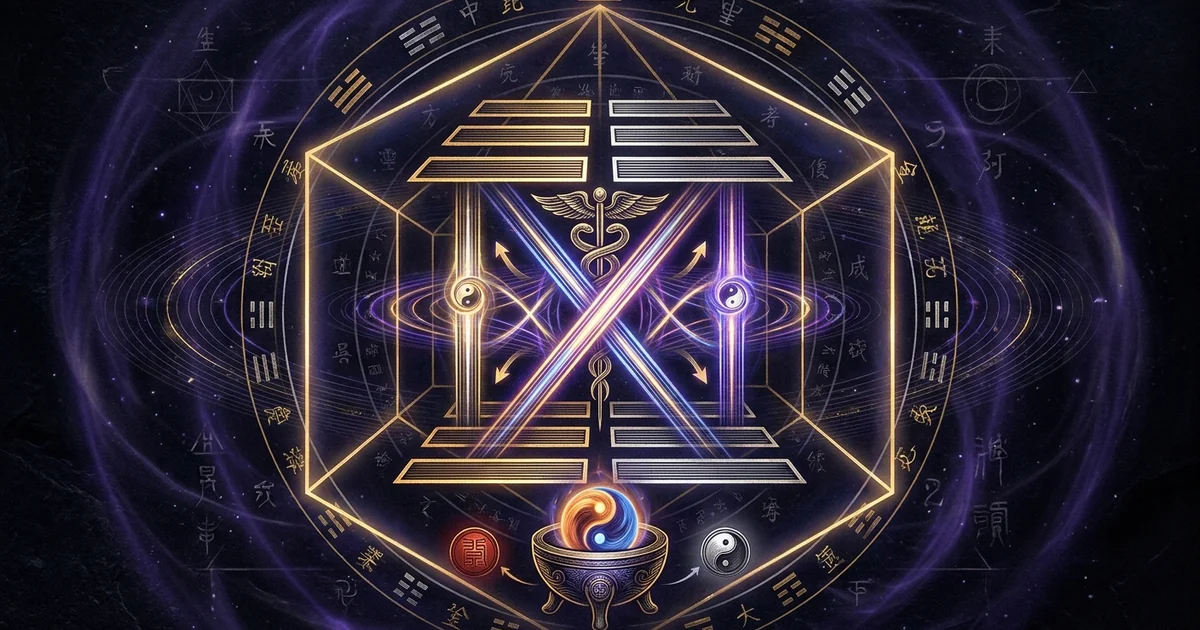
Explore dipolar resonance of lines iching corresponding positions to map structural equilibrium, systemic tension, and archetype individuation dynamics.
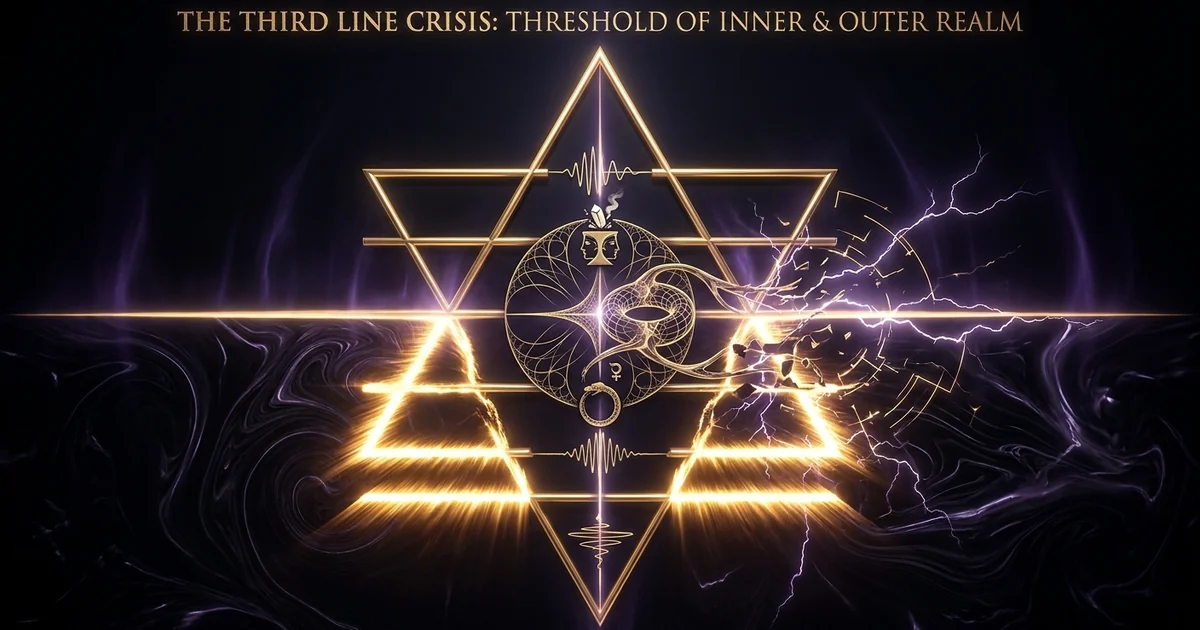
Analyze the third line crisis iching transition threshold as subjective lower trigram dynamics rupture upon confronting objective systemic realities.
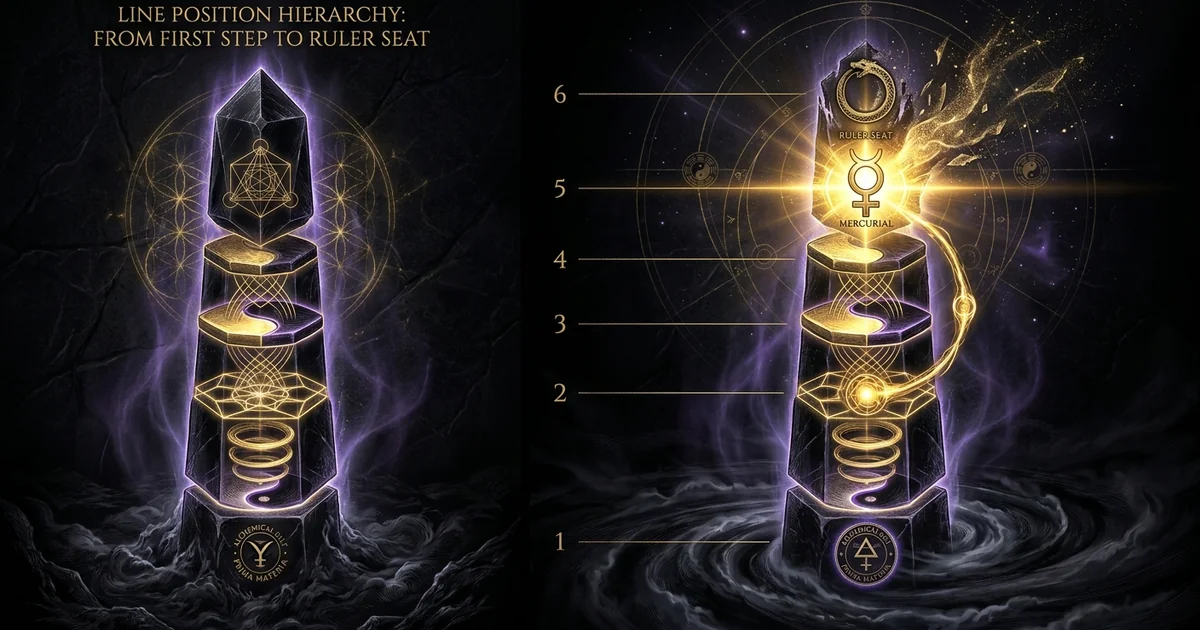
Explore the iching line positions hierarchy first to sixth. Discover topological spatial hexagram structure, from base potential to the fifth line ruler.
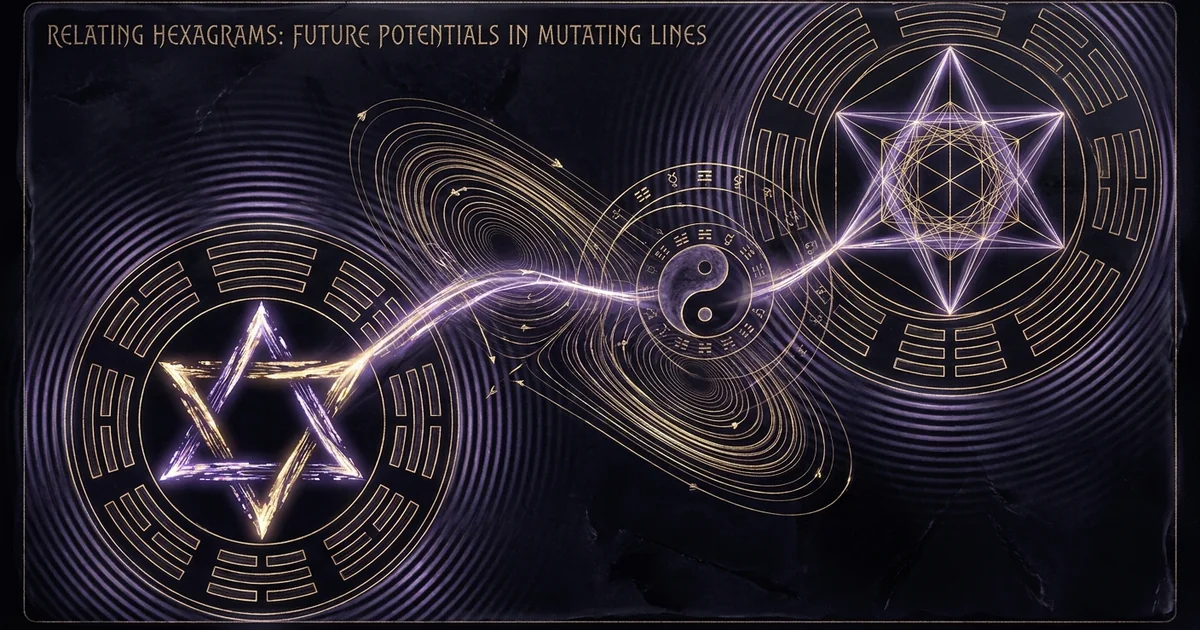
Analyze the relating hexagram zhi gua future outcome iching dynamics as nonlinear attractor states dictated by mutating lines and psychic enantiodromia.

Analyze the sixes and nines iching changing lines mutation to discover how thermodynamic phase transitions govern non-linear dynamic hexagram shifts.
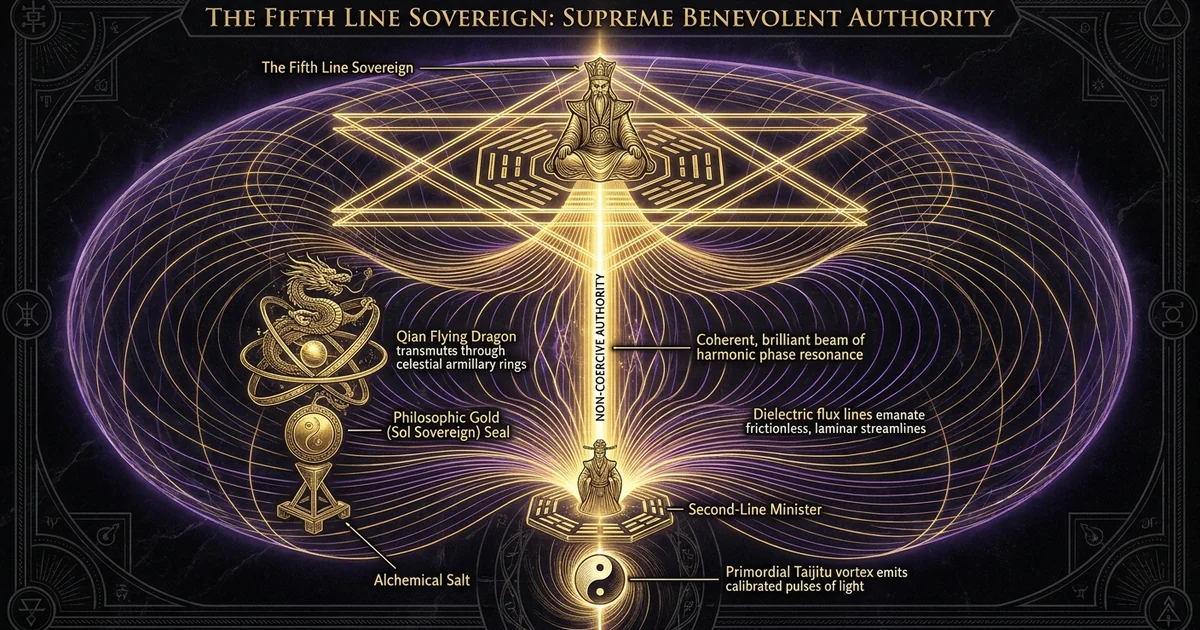
Explore the fifth line sovereign iching supreme position as an archetypal nexus of central virtue, dynamic equilibrium, and non-coercive statecraft.
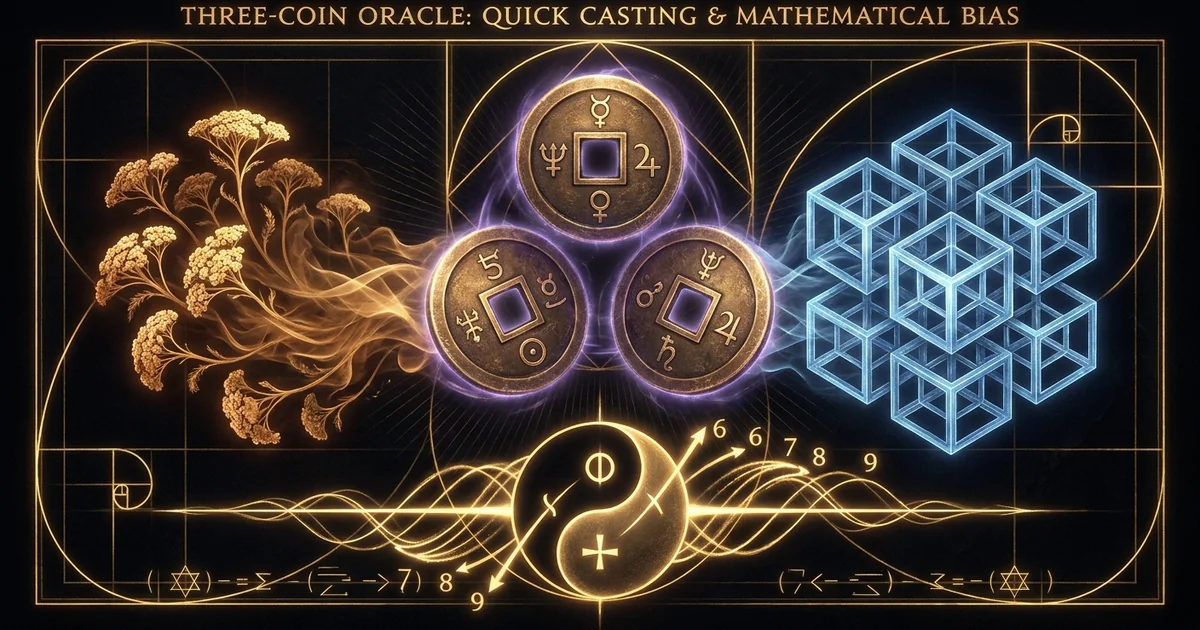
Analyze the three coin method iching oracle probability bias, contrasting coin casting ritual mechanics with traditional yarrow stalk state transitions.
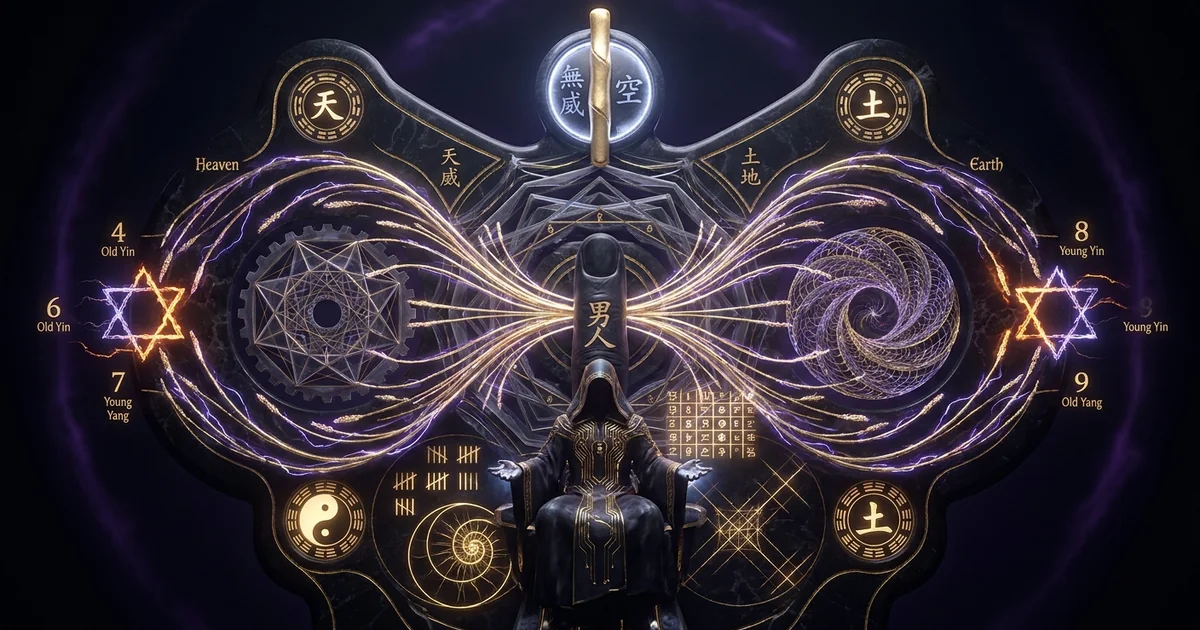
Explore yarrow stalk method iching divination probability dynamics: asymmetric state-space distributions and recursive ritual sorting in the classical.